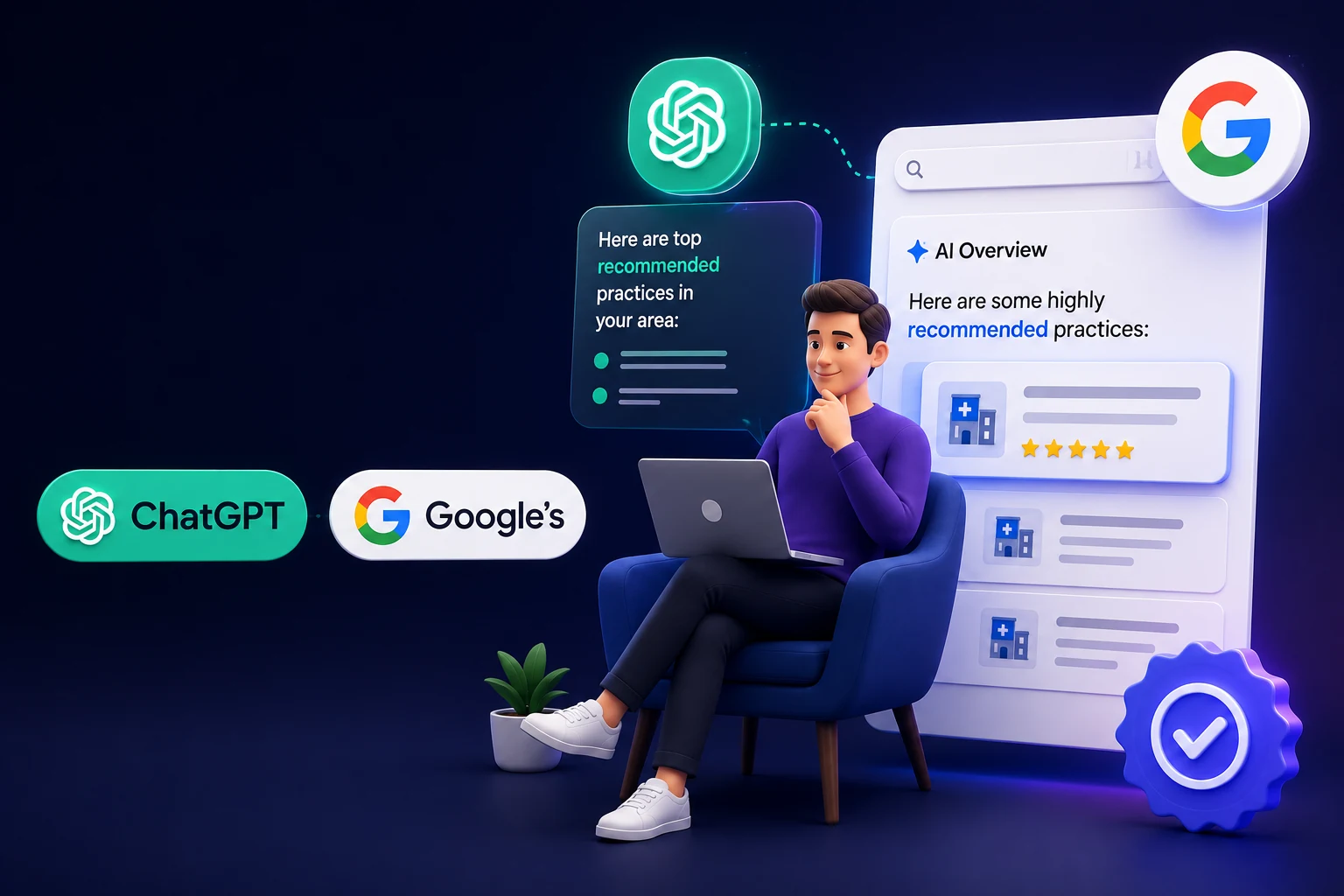
Search is quietly splitting in two. There are still the familiar blue links, and there's a growing habit of asking an assistant a question and taking the answer it gives. Someone deciding on a surgeon or a lawyer now often asks ChatGPT, Google's AI Overviews or Perplexity who to trust, reads the names it hands back, and only then starts looking anyone up.
That changes the goal. It's no longer only about ranking a page. It's about being the practice the assistant names in its answer. The good news is that most of the work that gets you named overlaps with good SEO. The difference is in how you frame and structure it.
Where AI answers actually come from
An assistant doesn't invent a recommendation out of nothing. It draws on what it can read about you: your own website, the third-party sites that mention you, directories, and reviews. When it needs a current answer, it often pulls live from search and summarizes what it finds, then links the sources it leaned on. So the question becomes simple. When an assistant goes looking, is the story about you clear, consistent and easy to quote?
This is why you cannot buy your way into an AI answer the way you can buy an ad. The engine is repeating what the open web already says about you. Your job is to make that story accurate, specific and easy to find in the first place.
What makes a practice easy to name
Answer the question directly on your page
Assistants favor content that states the answer plainly instead of burying it. A page that says clearly what you treat, who you treat, where you are and what makes you a safe choice is far easier to quote than one that opens with a paragraph of atmosphere. Lead with the answer, then support it. Headings that match the questions people actually ask, and short, direct paragraphs under them, give an engine clean pieces it can lift.
Make your facts machine-readable
Structured data is the code behind the scenes that labels your name, services, reviews and location so an engine understands them without guessing. For a practice that usually means the right business type, whether that is a physician, a legal service or a local business, with your details filled in accurately. When your visible facts and your structured data agree, an assistant can lift them with confidence instead of hedging.
Be consistent everywhere you appear
The same name, the same address, the same specialties across your site, your profile and the directories. Assistants cross-check sources, and contradictions make them hedge or leave you out. Consistency reads as reliability to a machine the same way it does to a person, and it is one of the cheapest things on this list to fix.
Earn mentions on the sites AI already trusts
When a reputable third-party page names you, it becomes another source the assistant can cite. Reviews, respected directories and genuine write-ups all add weight. You don't need to be everywhere. You need to be present and consistent on the handful of places that matter for your field, the ones an engine already treats as reliable when it answers questions like yours.
Curious what ChatGPT says about your practice right now?
Get your free auditReviews do double duty
The same reviews that help you in the map pack also feed AI answers. Assistants read them for sentiment and for the specifics people mention, and they lean on recent, detailed reviews when they describe you. A patient who writes that you explained a scary diagnosis clearly, or a client who mentions you answered on a weekend, gives an engine exactly the kind of concrete detail it likes to repeat. A steady stream of honest reviews is one of the few things that helps you in classic search and AI answers at the same time.
Why this is worth doing now
AI answers reward the same things good SEO always has, clarity, structure, consistency and trust, and they compound. The practices that get named today are teaching these engines to associate their field and their city with their name, and that head start is hard for a competitor to undo later. That is true whether you want to be the AI answer for a dental practice or a law firm. Waiting until your traffic drops to react is the expensive way to learn this.
If you want to know what an assistant says about your practice right now, and what it would take to be the name it recommends, that's one of the first things I check in a free audit.

Founder of Proximity Ranker, with nine years in SEO and a law background that shapes the medical and legal work we do. Meet the founder.