ProximityRanker
AI Search for Estate Planning Lawyers
When 'Someday' Suddenly Becomes Now, People Ask AI for an Estate Planning Lawyer
A baby, a diagnosis or a death turns someday into now, and they ask an AI what they need. We make yours the answer.
Get your free auditNo cost, no obligation, no lock-in contract.
See it live
What your patients see when they ask AI
Ask the three engines your patients use, and watch who they name. This is what a cited answer looks like when your practice is the one built to be quoted.
do I need a will or a living trust, and can I just make one online?
ChatGPT answer
CitedYour Firm · Wills and TrustsYour Firm · Consultation
A live example. The tabs cycle through how each engine answers; a real practice is named and cited the same way.
What it is
What is AI search optimization for estate planning lawyers?
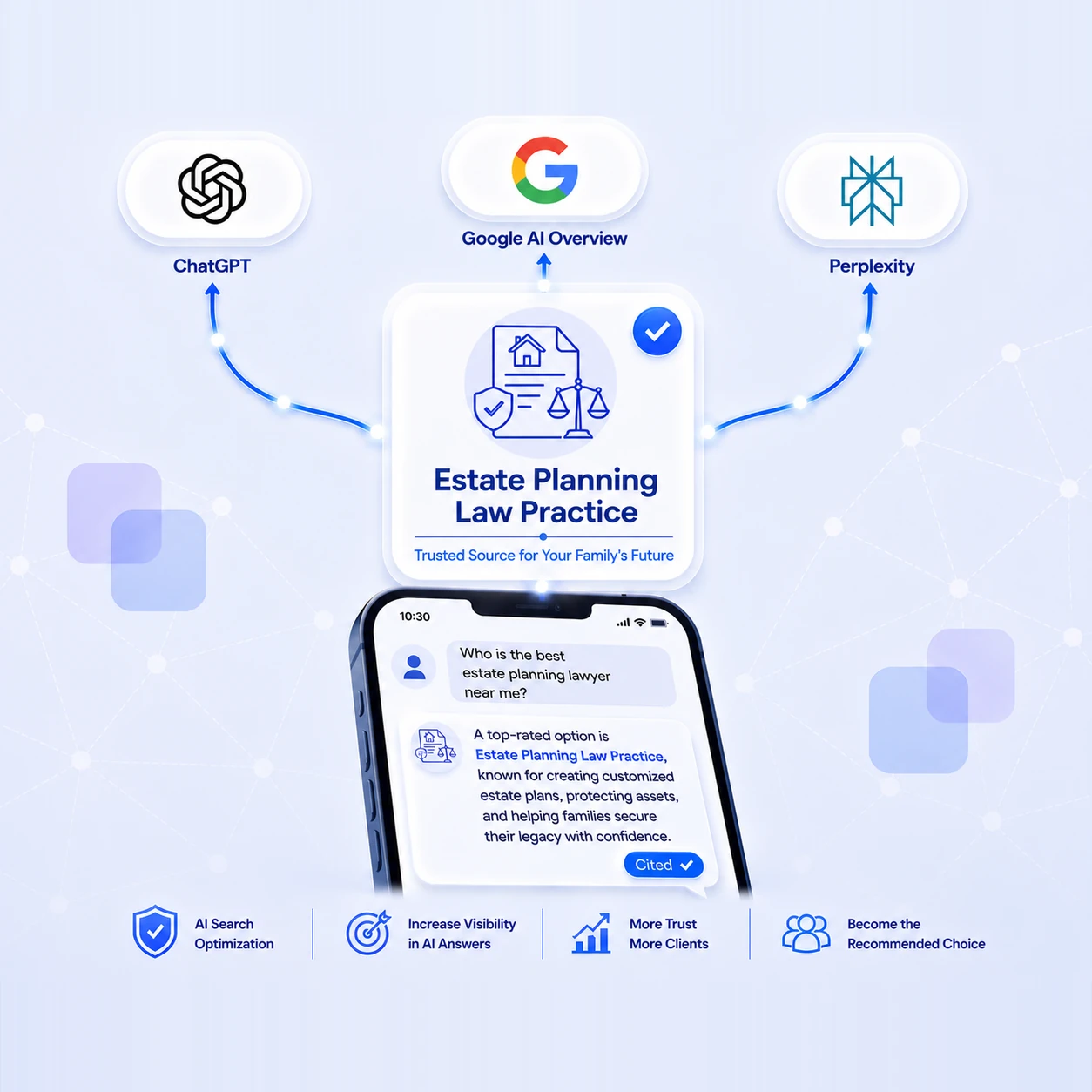
AI search optimization, or AEO, is the work of getting your estate planning firm named and cited when someone asks an AI engine whether they need a will or a trust, what happens without one, whether an online form is enough, or how probate works. It structures your document and matter pages, your attorneys' credentials and your firm identity so ChatGPT, Google AI Overviews and Perplexity can quote you as the answer, at the moment a life event finally turns years of putting it off into action.
- Entity and identity foundation
- Quotable document and matter pages
- The decision and trigger questions people actually search
- Structured answers and schema
- Reviews, credibility and AI answer monitoring
- Reporting you can act on
Why this matters now
The search your patients do has already changed
Search is moving from a page of links to a single answer. This is the shift your practice is being sorted by, whether or not anyone is optimising for it.
Industry figures from third-party 2026 research, directional and about the search shift itself, not this firm's results.
Recent results
Real numbers from recent work
Real Search Console and Bing screenshots. Practice names stay private, the numbers are untouched.
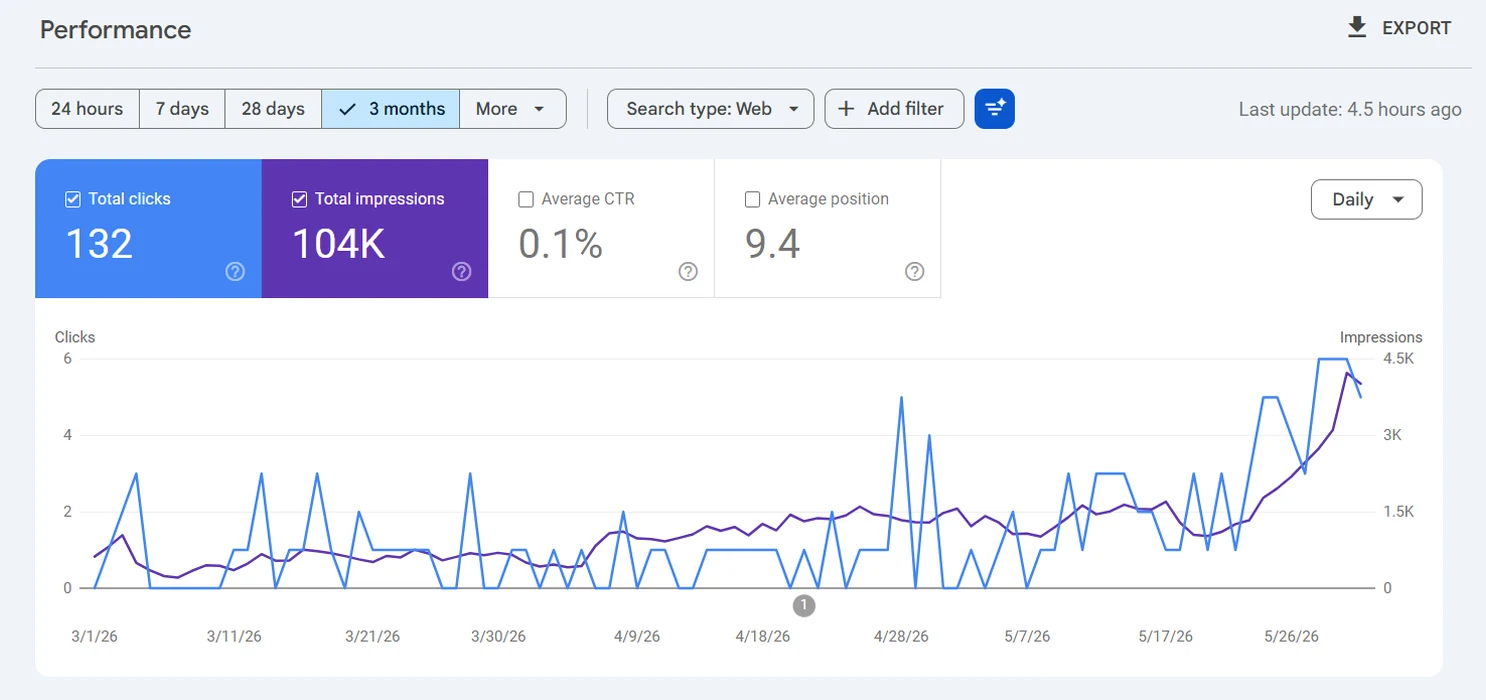
Law firm, new build
A brand new website to 104K impressions in its first 3 months, and still climbing.
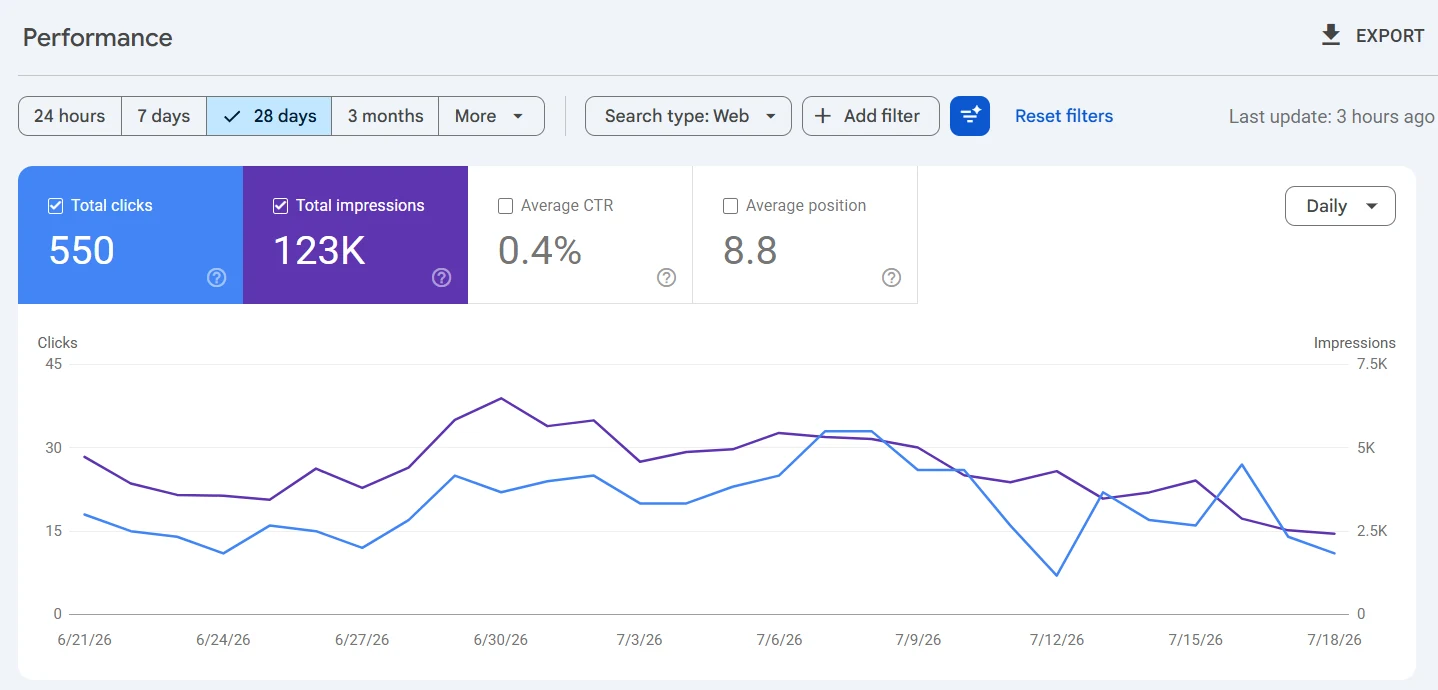
Psychiatry practice
123K impressions and 550 clicks in 28 days, at an average position of 8.8.
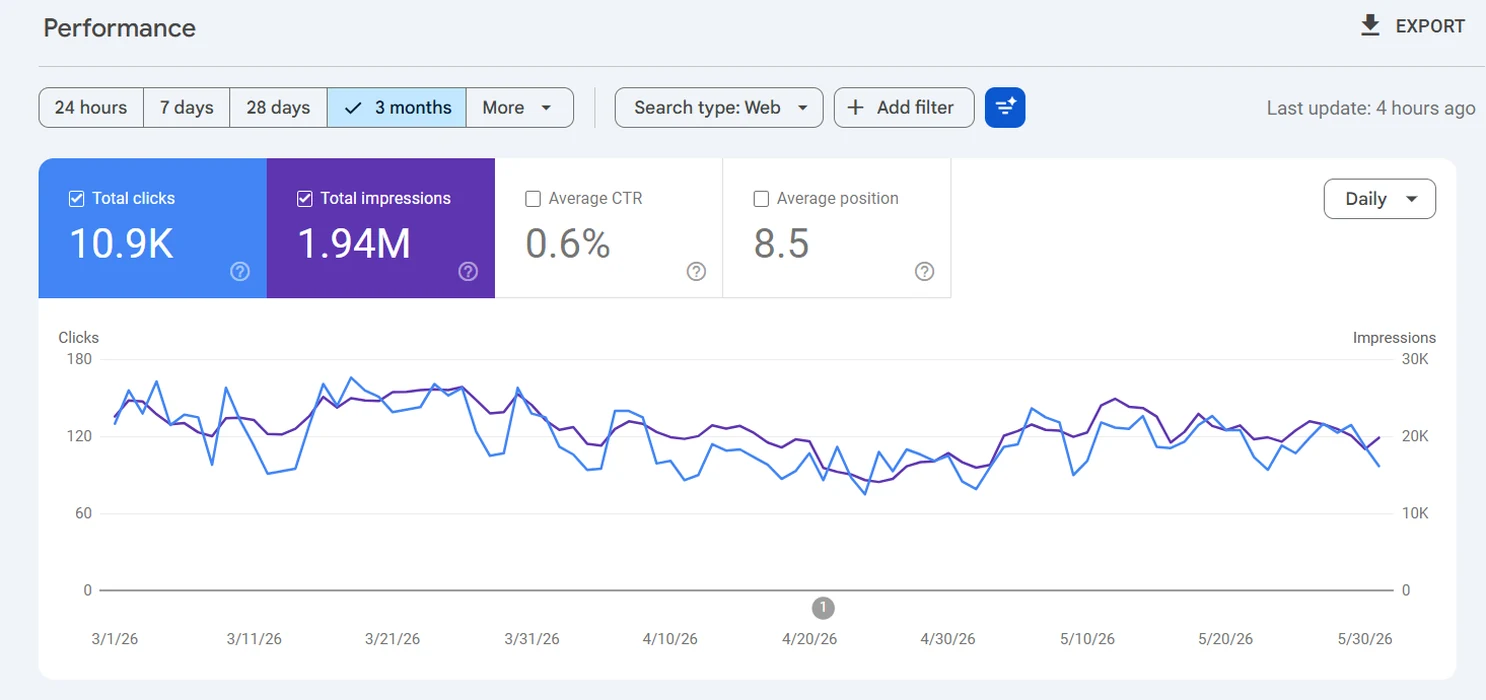
Gastroenterology clinic
1.94M impressions and 10.9K clicks in 3 months, holding an average position of 8.5.
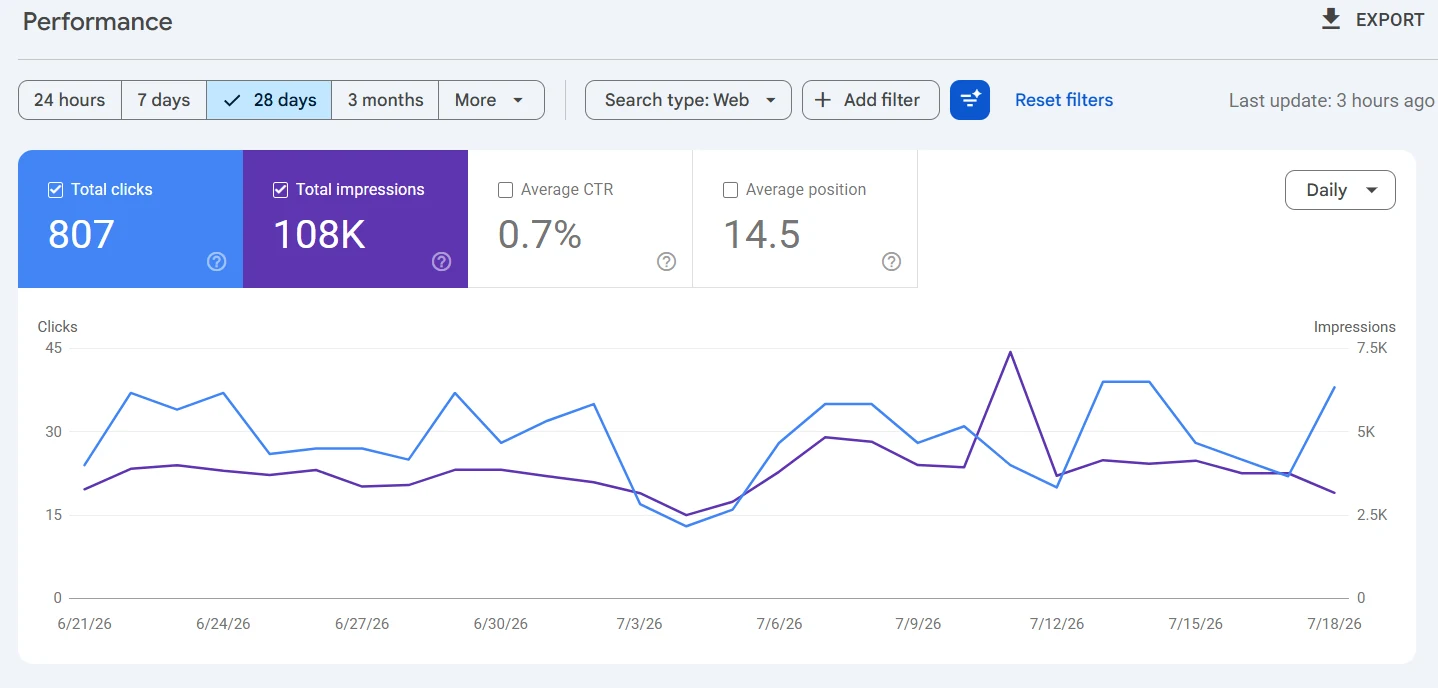
Orthodontic practice
108K impressions and 807 clicks in 28 days, at an average position of 14.5.
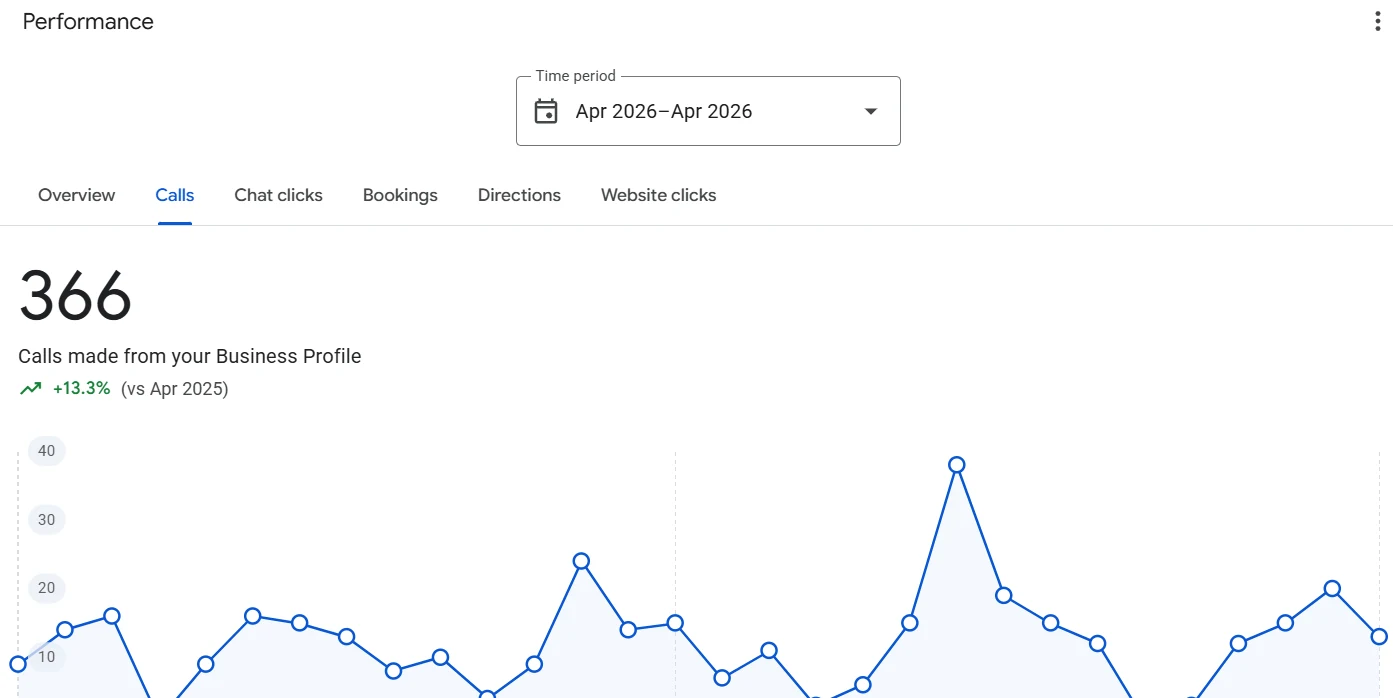
Orthodontic practice
366 calls straight from the Business Profile in one month, up 13.3% year on year.
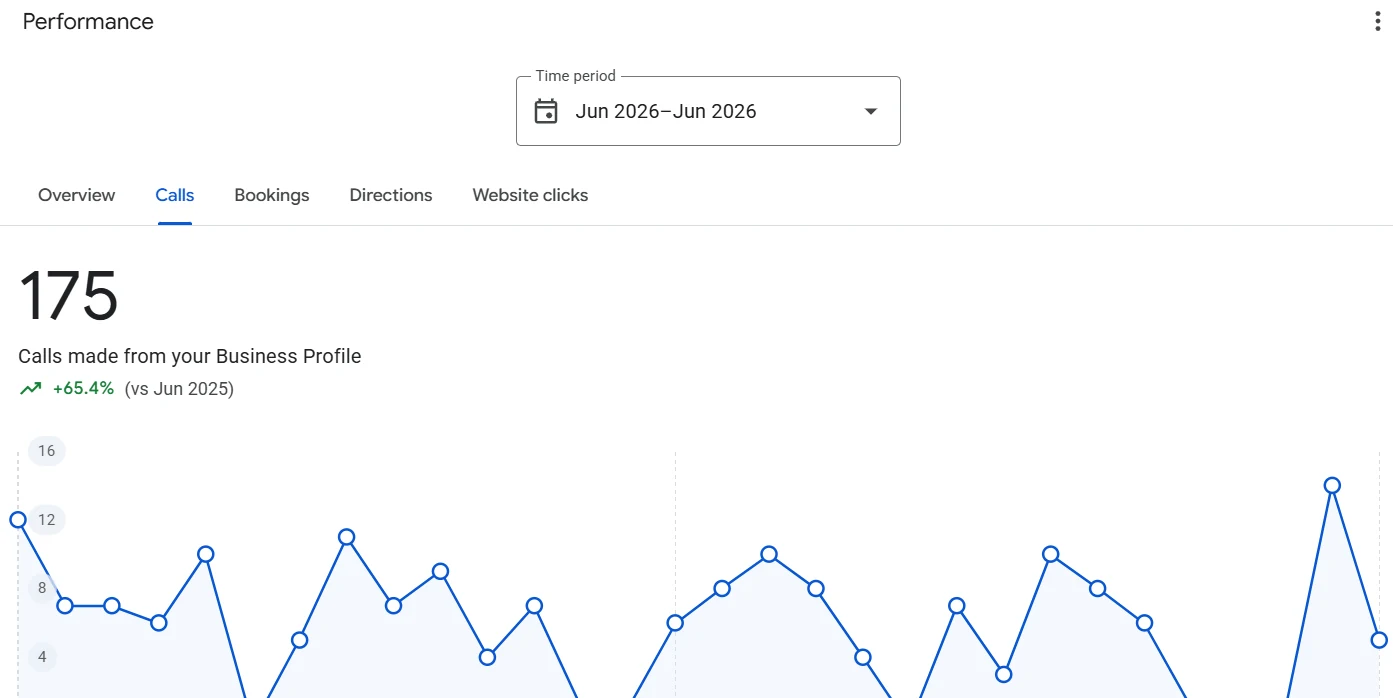
Gastroenterology clinic
175 calls straight from the Business Profile in one month, up 65.4% year on year.
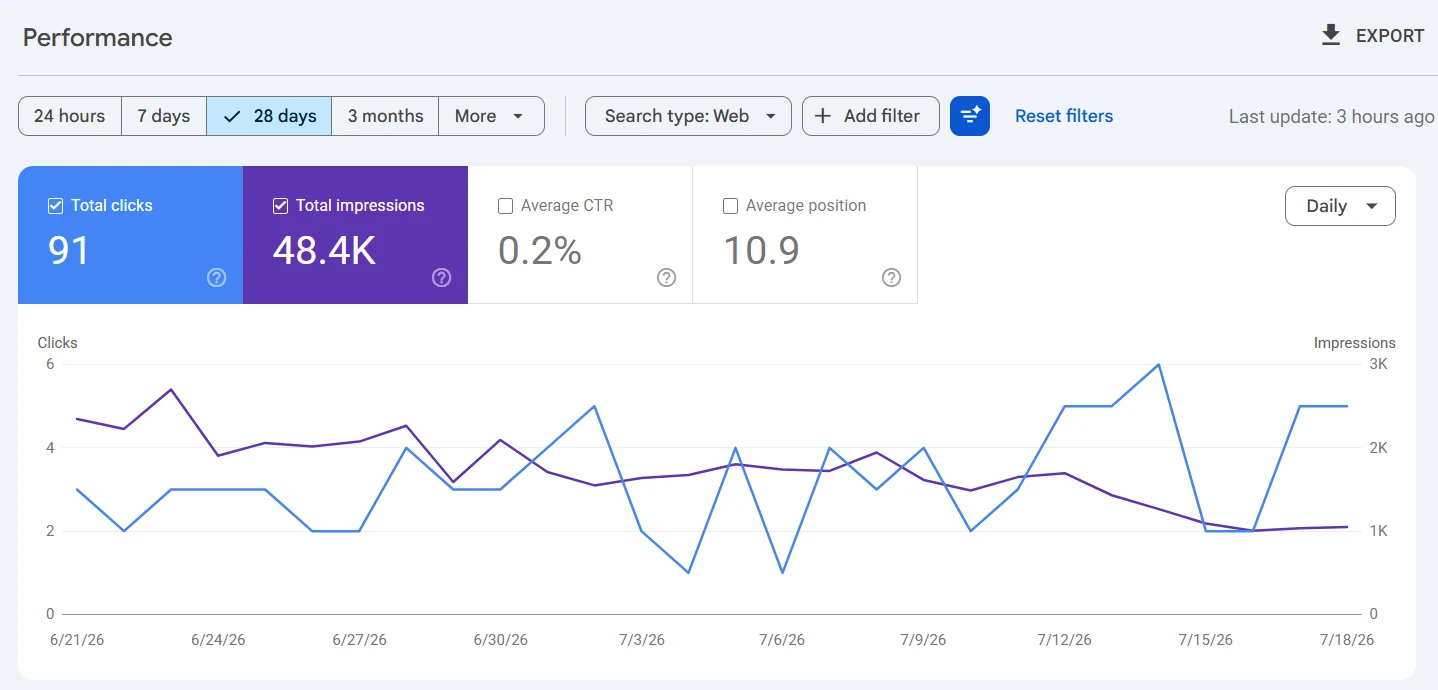
Pain management clinic
48.4K impressions in 28 days at an average position of 10.9.
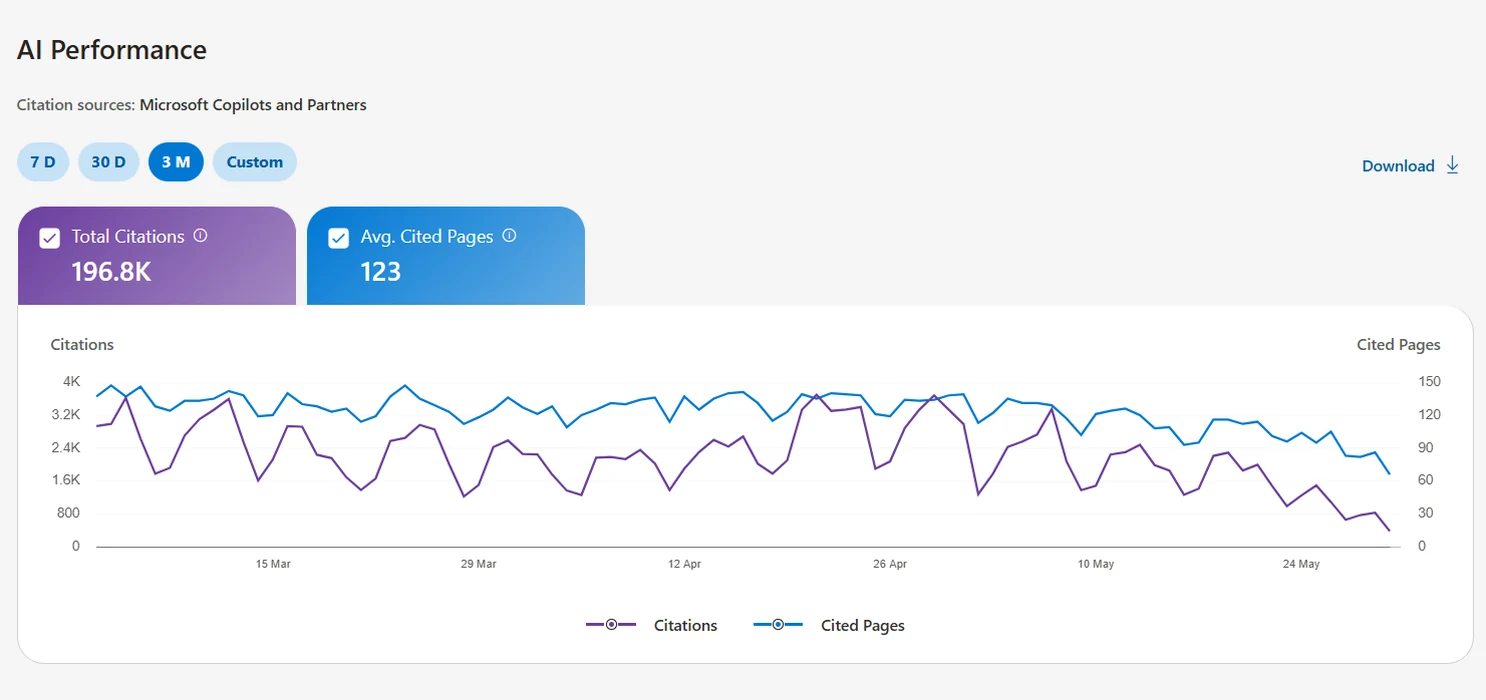
Gastroenterology clinic
196.8K AI citations across 123 pages, surfaced and cited by AI assistants.
Law firm, new build
A brand new website to 104K impressions in its first 3 months, and still climbing.
Psychiatry practice
123K impressions and 550 clicks in 28 days, at an average position of 8.8.
Gastroenterology clinic
1.94M impressions and 10.9K clicks in 3 months, holding an average position of 8.5.
Orthodontic practice
108K impressions and 807 clicks in 28 days, at an average position of 14.5.
Orthodontic practice
366 calls straight from the Business Profile in one month, up 13.3% year on year.
Gastroenterology clinic
175 calls straight from the Business Profile in one month, up 65.4% year on year.
Pain management clinic
48.4K impressions in 28 days at an average position of 10.9.
Gastroenterology clinic
196.8K AI citations across 123 pages, surfaced and cited by AI assistants.
One consistent identity
The same firm name, attorney list and the right category everywhere an engine looks, an estate planning firm, in the right state, since signing formalities and probate are state-specific. When your details disagree across directories and the bar listing, a model cannot be sure which firm you are, so it names one it can, often a directory or an online form service instead of you.
A real page per document and matter
Wills, revocable living trusts, financial and medical powers of attorney, healthcare directives, guardianship for minor children, probate and estate administration, estate tax, special needs and elder law, each on its own page with a plain answer near the top. A model quotes the page that matches the need, never one broad estate page.
A licensed, named attorney
The trust signals an engine leans on are bar admission and a named estate planning attorney as author on each page. Against an online form service with no lawyer behind it, a real credentialed attorney is what gets your firm cited, because on documents that only get tested after someone dies, the engine wants to name a source that will not fail the family.
Answers structured to be lifted
LegalService and FAQ schema, a 40-to-60-word answer under each heading, and decision-shaped subheads, a will versus a trust, an online form versus a lawyer, what happens with no will at all. This is the difference between a page an engine has to summarise and one it can quote word for word.
Reviews that describe a hard topic made clear
A client who had an uncomfortable, complex subject explained plainly and was put at ease is glad to say so, and engines pull that language into their summaries. Reviews about clarity and being made comfortable, never a promised tax result, feed the exact reassurance an AI reaches for when it describes a firm.
Freshness it can trust
Estate tax thresholds and rules change, so a visible review date and current content tell an engine the pages are maintained. Stale planning pages get passed over on questions where the numbers move, because an out-of-date answer is one the model is built to avoid.
What we do
What the estate planning AI search work actually covers
Entity and identity foundation
- One canonical firm identity built and pushed consistent across every directory, bar listing and legal aggregator an engine reads
- The firm established as an estate planning firm with licensed attorneys, in the right state, so a model resolves what you actually are
- Each attorney established as their own entity, linked to the firm, with bar admission and estate planning focus attached
- Your name, practice area and locations reconciled so no two sources disagree, and so a directory or online form service does not outrank you for your own name
Quotable document and matter pages
- A page per document, wills, revocable living trusts, financial and medical powers of attorney, healthcare directives, guardianship for minor children, each with a short extractable answer
- Probate and estate administration, estate tax planning, special needs trusts and elder law or Medicaid planning as their own pages, the matters beyond the basic will
- The city in the heading, so a near-me question resolves to where you actually practise
- Written for someone facing this for the first time, in plain language, not in trust and probate jargon
The decision and trigger questions people actually search
- Do I need a will or a living trust, and do I need a lawyer or can I do it online, answered honestly, an online will is fine for the simplest estate, so the page explains where it stops rather than dismissing it
- What happens if you die without a will, and why a DIY document's failure only surfaces after death, when no one can fix it, the point that turns a browser into a client
- What it costs as a flat fee and what a plan includes, since predictable pricing is what unsticks a procrastinator
- How probate works and how a trust avoids it, and when a life event should trigger planning, the follow-ups an engine gets next
Structured answers and schema
- LegalService, Attorney and FAQ schema mirrored to the visible text on every document and matter page
- Answers formatted so ChatGPT, AI Overviews and Perplexity can lift them without rewriting
- Nested schema that ties a document page, its attorney author and the firm into one signal
- Speakable and article markup where it strengthens extraction
Reviews, credibility and AI answer monitoring
- A review strategy focused on clarity and being put at ease on a hard topic, in clients' own words, worked into the pages engines quote, never promising an outcome
- Presence on the third-party legal sources these engines actually cite, kept accurate rather than left to a directory's default listing
- Your key client questions checked in ChatGPT, AI Overviews and Perplexity every month
- Whether you are named, which page is cited, and who is being named instead, a rival firm, a directory or an online will service
Reporting you can act on
- The engines you appear in, the questions you win, and the pages doing the citing
- AI citations and referral sessions traced back toward booked consultations and retained plans
- AI referral traffic separated out of Direct, where most of it hides by default
- A monthly call where you can ask why, not just read a dashboard
Meet the founder
SEO and AI search, led by the founder himself
I’m Ashikur Rahman. I’ve spent the better part of a decade in SEO, most recently as Partner and SEO Manager at Doctor Rank, a medical and legal SEO agency I helped found. Every plan, every strategy and every client win there ran through me and my team. Proximity Ranker is the next step, my own practice, built the way I’ve always believed this work should be done.
I keep it small on purpose. I stay selective about who I sign and cap how many clients I take on, so nobody ends up with a template pulled from a drawer. I build your strategy around your specialty, your city and your goals. My own background is in law, an LL.B and an LL.M, and that turns out to be a real edge in YMYL niches like medicine and law, where Google and AI reward genuine expertise and trust.
Hire Proximity Ranker and you work with me, not an account manager. I am not reviewing someone else’s work, I am doing it. The audit, the technical fixes, the content plan, the schema and the AI search work are mine. My team handles the off-page side and your reporting. Search has moved past ten blue links. Your next clients are already asking Google AI Overviews, ChatGPT and Perplexity who to trust, and earning a place inside those answers is the work I care about most.

Book a call and you talk to me directly, not an account manager.

How it runs
The first 90 days for an estate planning firm, from invisible to cited
No lock-in contract. AI visibility is measurable, so you will see whether you are being named more often, on real client questions, not asked to take it on faith.
- Day 0
See what AI says about you now
We ask the engines the questions your clients ask, do I need a will or a trust, can I just make one online, what happens if I die without a will, best estate planning lawyer near me, and record exactly what comes back: whether you are named, which page is cited, who is named instead, a rival firm, a directory or an online will service, and where your identity disagrees with itself across the web. It returns as a prioritised list, worst gaps first. No charge and no obligation.
AI auditCitation checkIdentity gapsDirectory gap - Month 1
Fix the identity and build the pages
The heavy month. One consistent firm identity reconciled everywhere an engine looks, so a directory or online service stops outranking you for your own name, a quotable page for every document and matter that lacks one, and schema for the firm and each attorney so a model can resolve who you are and where you practise.
Entity cleanupDocument pagesSchemaCredentials - Month 2
Make every answer liftable
The foundation is in, so now we make the site quotable. Short extractable answers under the will-versus-trust and online-versus-lawyer questions, flat-fee pricing made explicit, review language about clarity worked in, and presence built on the third-party legal sources these engines actually cite.
Extractable answersWill vs trustReview languageValidation - Month 3
See your name inside the answers
This is usually when it shows: your firm named in ChatGPT and AI Overviews on the questions that matter, more pages cited, and AI referral traffic pulled out of Direct so you can finally see it. We report on all of it.
Named and citedAI trafficMonitoringReporting
How do estate planning lawyers get found on AI search?
The trigger is usually a diagnosis, a death in the family or a new baby, and the first question is whether a will is enough or a trust is needed, and whether an online form will do. Engines answer from pages that explain the difference honestly, including when the cheap option genuinely works. A services list is not part of that answer. The firms cited have written the comparison, the probate consequences in their state, and what a form service leaves undone.
How does Google AI Overview optimization work for estate planning?
Will against trust is a textbook Overview query, and Google assembles it from indexed pages. To be one of them the comparison has to sit on a page answering in its first paragraph, break the differences into scannable structure, and name the state whose probate rules it describes. Pages hedging across all fifty states read as generic and lose to one that is specific about where it applies.
How is AI search different from regular SEO?
Regular SEO earns a ranking; AI search earns a mention. An engine does not hand someone ten links, it gives one answer and names a few firms inside it. That runs on different signals: a consistent identity, pages a model can quote, a licensed attorney and the third-party legal sources it trusts. The two overlap, but optimising for a blue-link ranking does not automatically get you cited.
Do people really ask AI about wills and trusts?
More than you would think, because estate planning is the task everyone means to do and keeps postponing. When a life event finally forces it, a new baby, a diagnosis, a parent's death, people ask an AI what they actually need and whether they can do it themselves, because it is private and there is no pressure. If the engine names three firms and yours is not one, you never enter the shortlist, and you never learn it happened.
Online will services are cheap. Can AI search still win us those clients?
Often, because the danger of a DIY will is exactly what an honest answer surfaces. A form cannot catch a state signing rule, a blended family or a guardianship issue, and the failure only shows up after death, when it is too late. A page that explains that plainly, structured so an engine can quote it, reaches the person at the moment they realise the cheap option could cost their family far more.
Lead-gen directories outrank us for our own name. Does AI change that?
It can work in your favour. Directories and form services win on Google by sheer size, but an AI engine is trying to name a trustworthy source, and a listing with no lawyer behind it is a weaker citation than a firm with named, bar-admitted estate attorneys and real document pages. Fix your identity and structure and you become the better thing for an engine to cite.
Can you guarantee ChatGPT will name our firm?
No, and anyone who guarantees a specific engine output is not being straight with you. What we can do is make your firm the easiest one in your area to cite, then measure it: we track your key questions across the engines every month and show you where you are named and where you are not. The trend is what we hold ourselves to.
We already rank well and run PPC. Isn't that enough?
It helps, because some engines read Google's results, but it is not the same job, and paid clicks stop the day you stop paying. A page can rank first and still never be quoted, because it is written to be clicked rather than lifted. And when Google answers with an AI Overview above your ad, the click you paid for can disappear into a summary that names someone else. Being cited in that summary is the work.
Does the will-versus-trust question show up in AI answers?
It is one of the most common, because it is the first thing someone wants settled and the hardest to sort out alone. They ask an AI which they need and why, and a good answer explains what each does and when a trust is worth it. A page that handles it plainly and is structured to be quoted becomes the source an engine cites, and it reaches a client right as they are deciding to finally act.
How do you measure whether this is working?
Three ways. We test your client questions in each engine on a schedule and log whether you are named and cited. We separate AI referral traffic out of Direct, where most of it lands invisibly. And we tie both back toward booked consultations and retained plans. You see the answers moving, not just a promise that they will.
How long before we start getting cited?
Identity and schema fixes can change what engines say within a month or two, because those are the gaps that most often keep you out. Being consistently named on competitive questions like wills versus trusts takes longer, usually three to six months, as the pages mature and the reviews build. Anyone promising instant AI dominance is selling something.
What does the free audit include?
We ask the engines your clients' real questions and show you exactly what they say today: whether you are named, which pages are cited, who is named instead, a rival firm, a directory or an online will service, and where your identity is working against you across the web. Back inside 24 to 48 hours with nothing owed.
Free audit
See what AI says about your estate planning firm
We ask the engines your patients' real questions and show you what they say today: who is named, which pages are cited, and where you are invisible. Back with you in 24 to 48 hours, at no cost.
Get your free auditNo cost, no obligation, no lock-in contract.