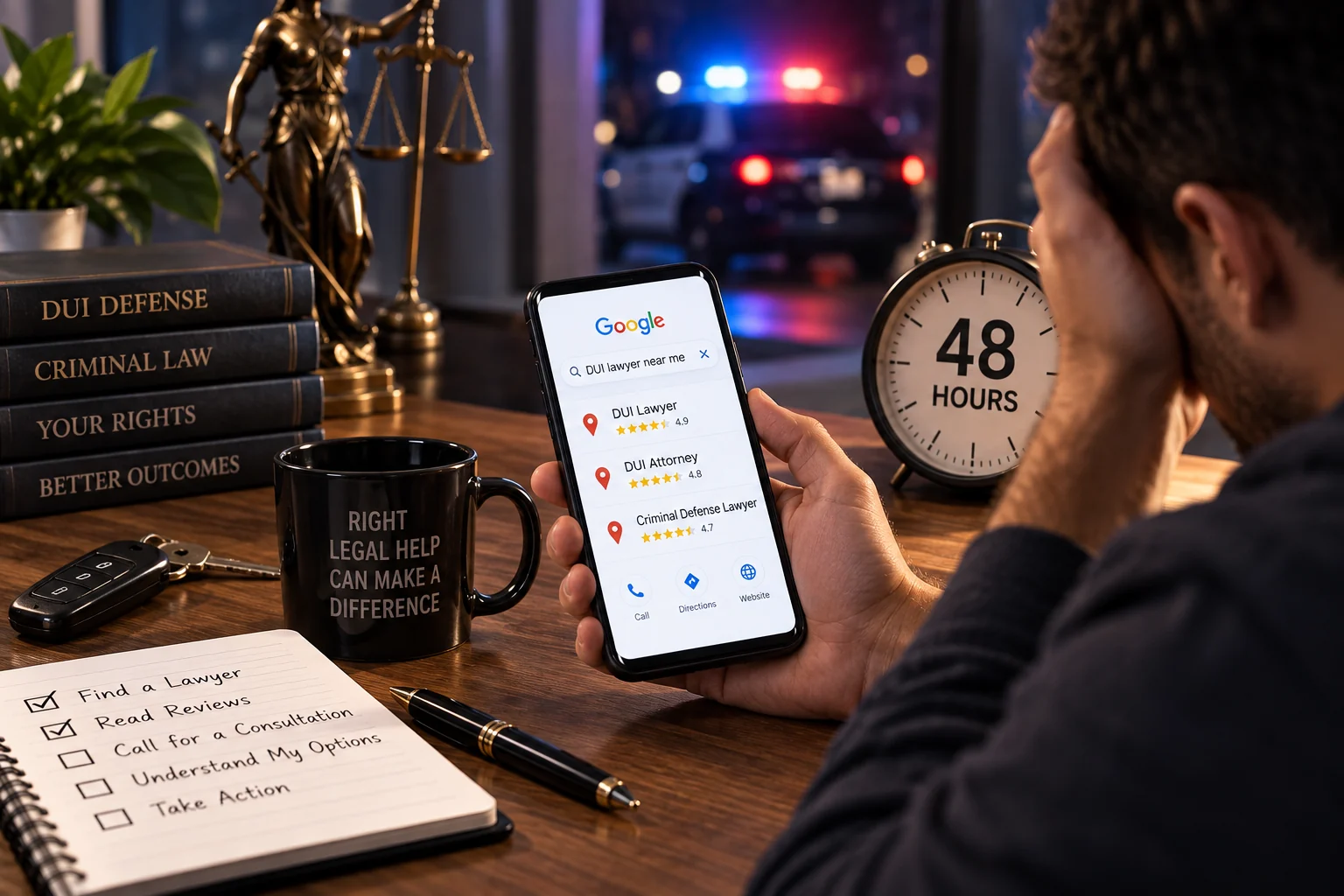
This one is written for the owner of a defense firm, about the person on the other side of the screen. I am not giving legal advice here and I am not qualified to; I am describing buying behavior, which is my job, and the criminal law is yours.
The reason to map it hour by hour is that DUI is the fastest purchase decision in legal services. Personal injury takes weeks. Estate planning takes years. A first-time DUI client will usually have hired somebody inside two days, and most of the decision happens at hours when your office is dark.
Hours zero to six: nothing you do reaches them
Between the stop and release, your firm can't be part of this. No searching, no calls, phone in a property bag. It matters only because of what it does to the person: by the time they can act they have been awake all night, they're humiliated, and they're certain their life has changed permanently.
Everything after this runs on that emotional state, which is why the copy that works in DUI is calm and specific rather than aggressive. The billboard voice, fight your charges, works against you in the first hours because it raises the temperature of someone who is already at maximum.
Hours six to twelve: the first search, and it's private
This happens in a car outside the station, or in a kitchen at six in the morning. It's the most important hour in the whole sequence and the one most firms are absent from.
Two things are being searched. First, what happens now: what a DUI charge means, whether they will lose their license, whether this is jail, whether work will find out. Second, and usually a few minutes later, who handles this locally.
Note that the first search is informational and most defense firms have nothing for it. The person who answers the what happens now question is the firm that gets shortlisted for the who do I call question ten minutes later, because by then they're the only name that has already been useful.
The second thing that decides this window is whether a phone gets answered at 6am. Not an answering service reading a script, and not a form promising a response within one business day. A human. In this niche, that single operational detail outperforms most of what gets spent on advertising, and it's the cheapest thing on this page to fix.
Want to know what someone searching at 6am in your county actually finds?
Get your free auditHours twelve to twenty-four: the shortlist forms
By the afternoon they have slept badly and are researching properly. This is when your website is read rather than glanced at, and it's read in a specific order that's easy to verify by watching anyone do it.
- Does this firm actually do DUI, or is DUI item nine in a list of practice areas. A dedicated page reads as a specialty; a bullet reads as an afterthought.
- Have they handled this in my county, in front of my court. Local specificity matters more in criminal defense than in almost any other legal niche, because the client believes the courthouse relationship is the product.
- What do people like me say. They're reading reviews for someone in their situation, not for a star average.
- What's this going to cost me, and what happens first. Not a price, a process. What the first meeting involves and what gets decided.
This is also the window where a family member gets involved, usually a spouse or a parent, and often they're the one doing the actual reading. Copy that assumes the reader is the accused person misses the person who is frequently paying and always influencing.
The deadline nobody told them about
There's a structural feature of DUI that changes the marketing completely, and firms consistently underuse it.
In many states the license consequence runs on a separate administrative track from the criminal case, with its own short window to act, often measured in days rather than weeks. The specifics vary by state and I am not going to pretend otherwise, and the client almost never knows the track exists. They think they have until the court date on the paperwork.
A firm that explains the two-track structure plainly, with the actual deadline for its own state on the page, does two things at once. It gives the reader genuinely useful information at the moment they need it, and it converts a shopping process into an urgent one, honestly, because the deadline is real. That page tends to be the highest-value page on a DUI practice's website, and most firms don't have it.
Hours twenty-four to forty-eight: calls, and the first two minutes
Day two is calls. Usually three or four firms, usually in the order they were shortlisted, and the decision is typically made on the first two of those calls.
What decides it isn't credentials. By this point everyone on the list looks qualified. It's whether they felt spoken to as a person who made a mistake rather than as a case number, whether they got a clear picture of the next thirty days, and whether anyone treated their job and their license as the real problem, which for most first-time clients it's.
Two practical consequences for the firm. Whoever picks up the phone is doing your sales, so how the first ninety seconds go matters more than any page on your site. And second, the client is comparing you against the last call they made an hour ago, so being second is genuinely harder than being first, which is the whole argument for the 6am pickup.
Where the online part fits, honestly
The web's job in DUI is narrow and it's worth being precise about it. It gets you into the set of names considered at 6am and into the shortlist by afternoon. It doesn't close anybody. The close happens in the first two minutes of a phone call, and no amount of design fixes a phone nobody answers.
What that means in practice is that the highest-return work is unglamorous. A profile that's complete and answers the hours question. A dedicated page for this charge with the local courthouse named. The administrative deadline explained. Reviews that sound like the person reading them. Then, and only then, the rest. The ranking side of that for a defense firm is real work, but it's pointless if the 6am call goes to voicemail.
One more thing that has changed. A share of that 6am search now happens inside an AI assistant rather than a results page, and the assistant answers the what happens now question directly and then names two or three firms. Whether you're one of the named ones is decided by how an AI answer gets assembled, which is a different mechanism from ranking and needs checking separately.
Build the presence map
Draw the 48 hours across a page and mark the six moments: the first private search at 6am, the first call attempt, the afternoon site read, the review check, the family member's read, and the day-two calls.
Under each moment write what someone would find if they went looking right now. Be literal about it. Run the searches yourself, logged out, at that hour if you can bear it. Call your own office at 6:15am from a number nobody recognizes and listen to what happens. Read your DUI page on a phone, out loud, as though you were frightened.
Almost every firm that does this finds the same thing: the gap isn't in the marketing, it's in hours six to twelve, and it's fixable in a week without spending anything. That's a better outcome than a redesign.
If you want the outside version, a free audit covers what a person actually finds in those hours in your county: what you rank for on the charge terms, what your profile says about hours and response, what the first four listed firms have that you don't, and whether an AI assistant names you. Inside 24 to 48 hours, no cost, no obligation.
Want your firm's presence mapped across the 48 hours that decide it?
Get your free audit
Founder of Proximity Ranker, with nine years in SEO and a law background that shapes the medical and legal work we do. Meet the founder.