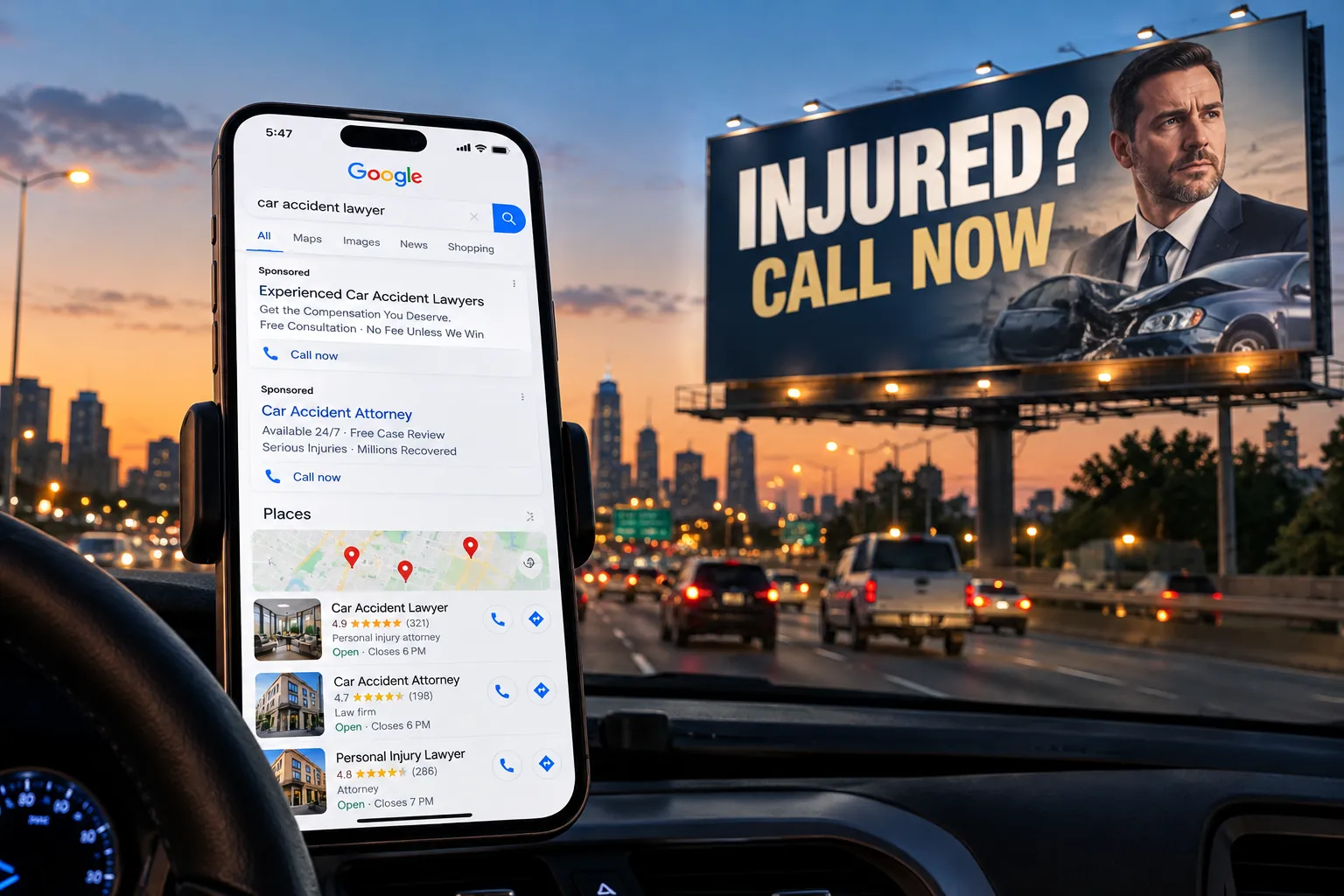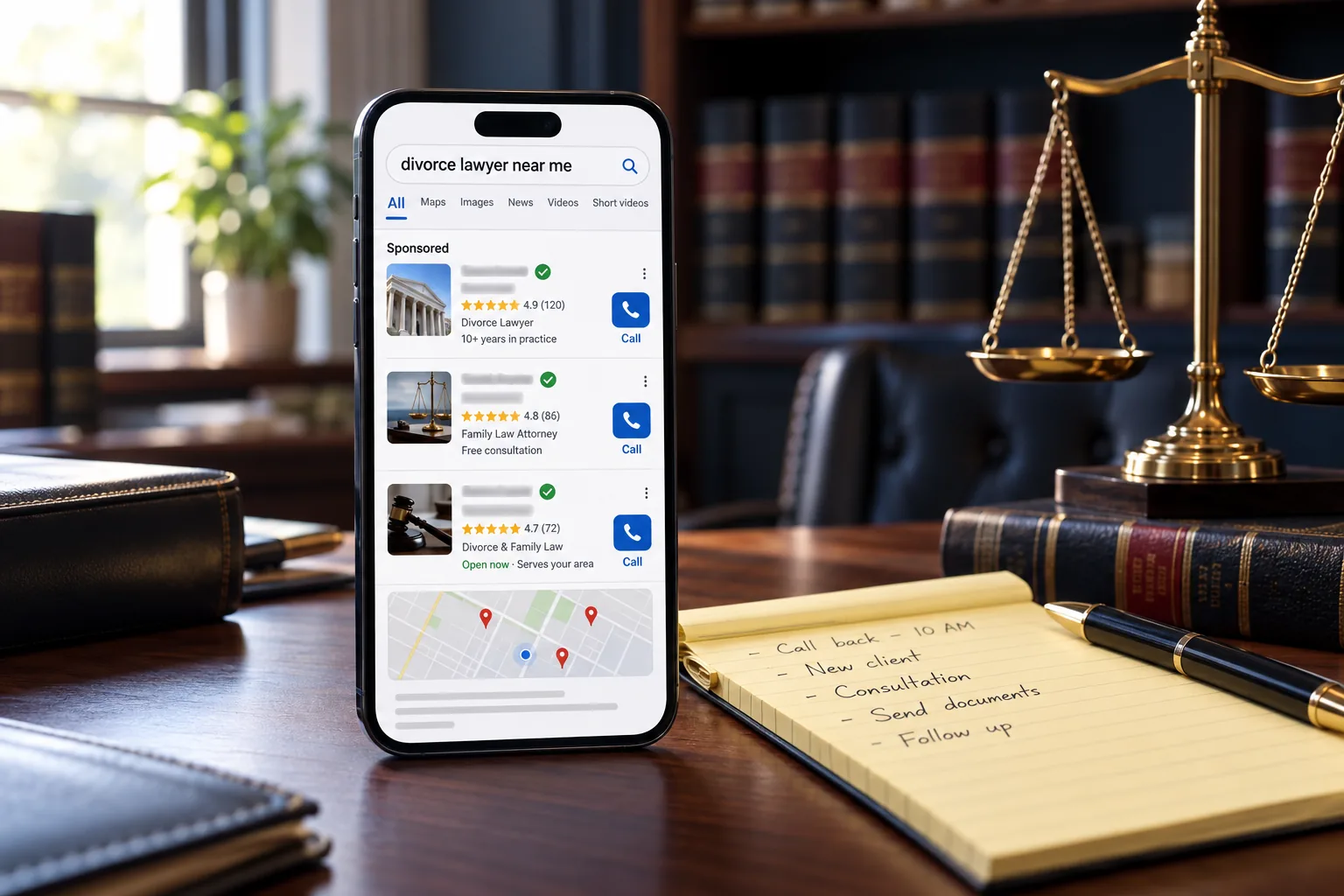
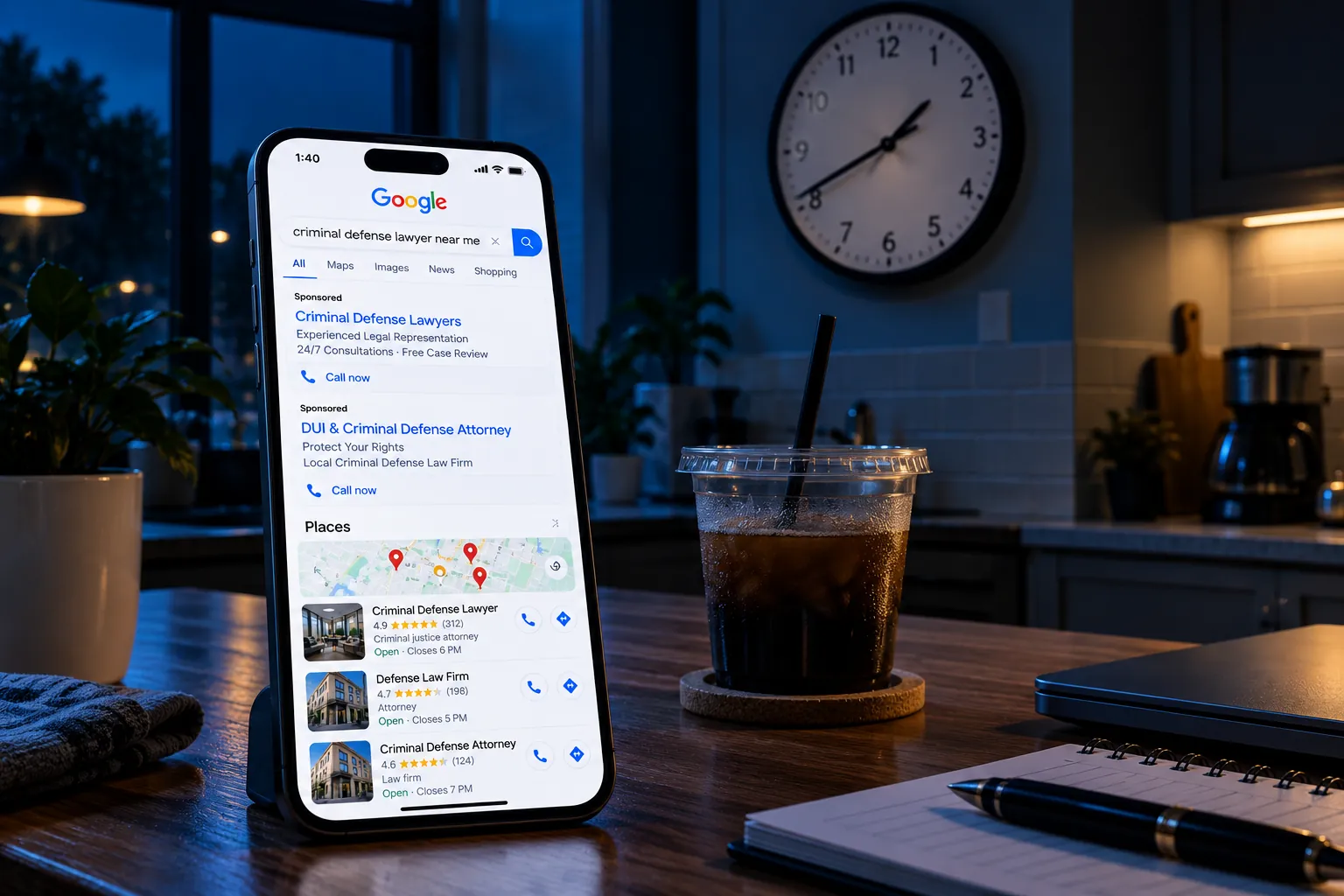
Short answer: be the firm that shows up first and answers first. People looking for a defense lawyer are usually in a hurry. They search on a phone, often outside office hours, and often for a son, a spouse or a friend. They tap one of the first few results in the map or on the page, and they call until someone picks up. A defense firm gets more clients by ranking in the map near its office, having a page for each kind of charge it takes, having a page that loads fast on a phone with the number at the top, and answering that number at 2 a.m. on a Saturday.
I'm Ashikur Rahman, and I run Proximity Ranker, an agency that works only with law firms. My background is law (an LL.B and an LL.M) as well as search: I've done SEO since 2017, and before starting the agency I was SEO Manager at Doctor Rank. One firm whose search work I handled reached 23,300 Google clicks and 3.55 million impressions in six months. What follows is about how people find and choose a defense lawyer. It says nothing about criminal law itself and isn't legal advice.
How do people search for a criminal defense lawyer?
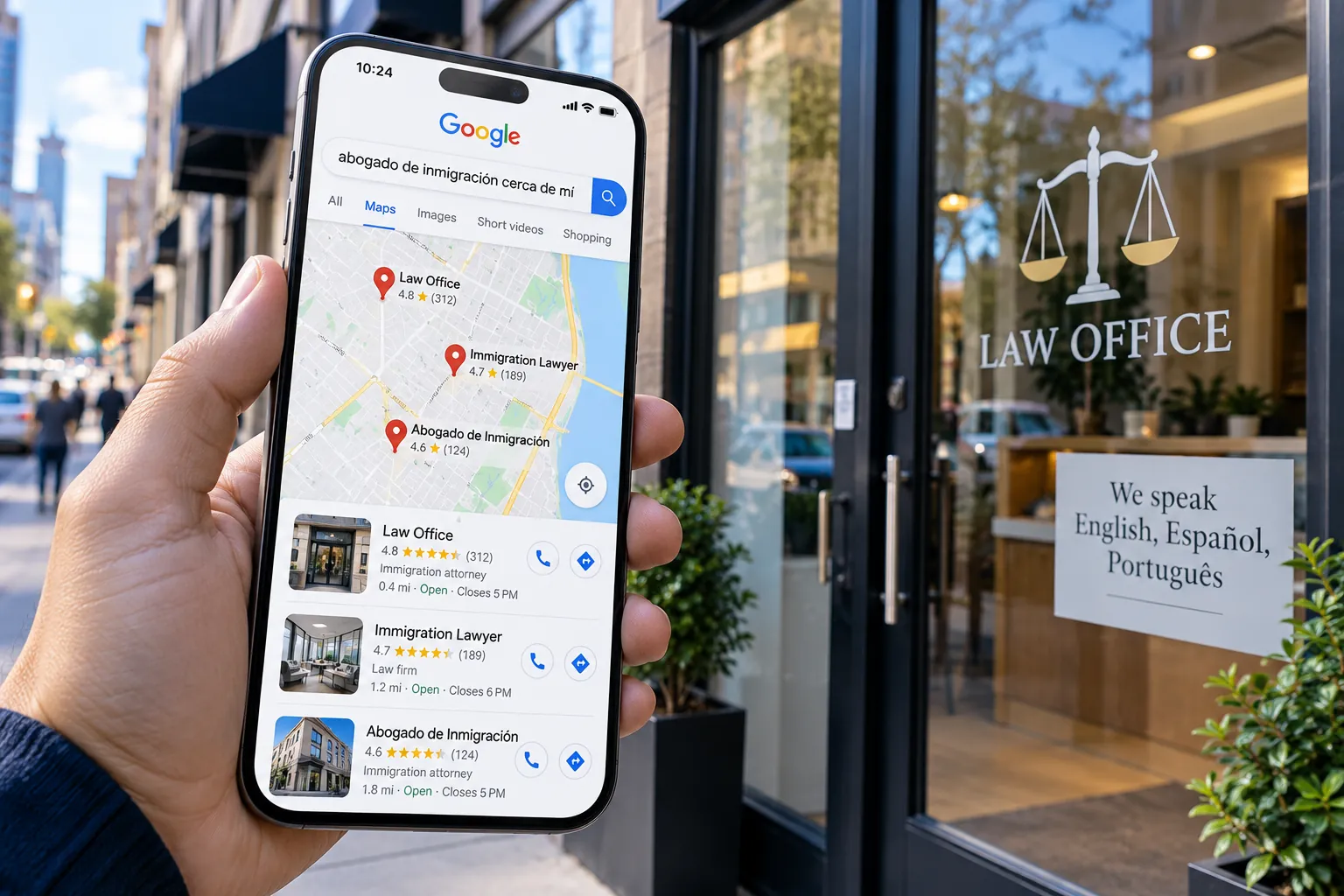
Fast, specifically and locally. They type the charge, the place, or both. These are the kinds of searches a defense firm's pages should match:
- criminal defense lawyer near me
- DUI lawyer near me
- drug charge lawyer
- domestic violence lawyer
- theft lawyer
- federal criminal lawyer
- juvenile defense lawyer
- best criminal lawyer in [city]
The phrasing tells you how ready the searcher is. Someone typing "DUI lawyer near me" at midnight wants a phone number. Someone typing "what happens at a first DUI court date" is researching, and may not call for days. A defense site needs pages for both, but the pages that bring in cases are the ones that answer the first kind of search with a number and a reason to call it.
The searcher often isn't the client. It's a parent or partner trying to help, which means the page has to make sense to someone who knows nothing about the process and is frightened. Plain words, a clear phone number and a sense of who will answer work better than a page of legal terms.
Why do criminal defense calls go to the first firm that answers?
Because the caller can't wait, and most firms make them. When Clio sent its own test inquiries to law firms for the 2019 Legal Trends Report, more than half never returned a voicemail within 72 hours. The people Clio surveyed ranked a quick response above every other factor in choosing a lawyer.
In defense work, 72 hours is far too late. A caller who reaches voicemail at night calls the next firm in the list. Every defense firm that wants more cases needs a live answer around the clock, from someone at the firm or from an answering service trained to book consultations, with a callback from a lawyer the same morning.
What pages should a criminal defense website have?
One page for each kind of case the firm wants. A single "Criminal Defense" page listing a dozen charges matches none of those searches well. A page for DUI defense, another for drug charges, another for domestic violence, each written for the person searching that phrase, gives Google something specific to rank and gives the visitor something specific to read.
- Say who the firm defends and where its office is in the first lines.
- Put the phone number, clickable on a phone, at the top of every page, and say when it's answered.
- Explain what happens when someone calls: who answers, how fast a lawyer calls back, what to have ready.
- Show the lawyers, with real photos and bios linked from every practice page.
- Keep one page per office city. Hundreds of near-identical town pages don't help and can hold the site back.
How does a criminal defense firm get into the map pack?
Google ranks map results on relevance, distance and prominence. For defense firms, the map often matters more than the website, because urgent searches on a phone show the map first.
- Choose the primary category that matches the firm's main work, and add other categories only for cases the firm really takes.
- Set hours that match when the phone is actually answered. If someone picks up around the clock, say so.
- Name the case types in the description and services list, in the words clients use.
- Add real photos of the office and lawyers, and post updates regularly.
- Make sure the name, address and phone match the website and the main legal directories exactly.
Distance matters more in defense than in most practices, because urgent searches lean hard on the searcher's location. A firm usually ranks best in the few miles around its office and fades beyond that. That's normal, and it's why fake offices in other towns are tempting and why Google removes them. The way to reach further is a real second office, or organic pages and ads that work beyond the map's range.
Want to see where your firm shows up when someone searches at 2 a.m.?
Get the auditHow do reviews work when defense clients want privacy?
They're harder to get, so they're worth more. Many defense clients will never post publicly about their case, and they shouldn't be pushed. But satisfied clients and their families often will, especially when asked at the right moment and given a direct link. Many write only a first name or initials, and that's fine.
Reply to every review briefly, and never confirm or discuss any details of a client's matter in a reply, even to answer a negative review. Check your bar or law society's rules before you write anything beyond a short thank-you. If a review breaks Google's own rules, for example because it's fake or from someone who was never a client, it can be reported for removal.
Should criminal defense lawyers use Google Ads?
They often work well, because defense searches are urgent and the searcher wants to call now. WordStream by LocaliQ's 2025 benchmarks put the average legal click at $8.58 and the average legal lead at $131.63. Defense firms get the most from ads by doing three things: running them at night and on weekends, when many searches happen and some competitors switch off; sending clicks to the page for that charge, not the homepage; and only running ads when someone is ready to answer the phone.
How do you know which marketing brings in defense cases?
Track by charge and by hour as well as by channel. A defense firm's calls come in bursts, often at night and over weekends, and each kind of case has its own value. Knowing that DUI calls from the map arrive mostly late at night tells you when the phone must be covered and when ads should run. Knowing that drug-charge calls come mainly from one page tells you which page to improve next.
- Give the website, the Business Profile and each ad campaign its own tracking number, all forwarding to the main line.
- Have whoever answers record the charge type, the source and the time of every new call.
- Count signed cases by source each month, not only calls, because some channels bring callers who never hire.
- Review missed calls weekly. Each one after hours is a case that may have gone to another firm.
After two or three months the pattern is usually obvious, and the budget can follow it.
Do defense clients use ChatGPT to find a lawyer?
More are starting to, especially families researching after the first panic. They ask things like "who is the best DUI lawyer in my city" and get a short list of names. Those answers draw on the same signals as Google: practice pages that answer real questions, consistent listings, reviews and mentions elsewhere on the web. My guide on how law firms get recommended by ChatGPT covers it.
What does marketing a defense firm cost with me?
Defense firms on my SEO plan pay $799 a month if they're among the first five to join, and that figure is locked for as long as they stay. Later firms pay $1,199. There's no contract: the plan runs month by month and covers the map listing, a page for each charge, review requests and replies, and checks on what AI tools say about the firm. Google Ads management, the audit and negative review removal cost nothing extra on the plan, and after six months the firm can have a new website built free. A firm that only wants the diagnosis can buy the audit alone: one office is $350, two are $550. See the criminal defense lawyers page for how this fits a defense practice, and the pricing page for the full terms.
What else do law firm owners ask?
01What is the fastest way to get more criminal defense clients?
Answer every call, every hour. Then run Google Ads at night and on weekends to the page for each charge you take. Both work within weeks, while the map listing and organic pages build over months.
02Do criminal defense lawyers need an answering service?
If no one at the firm can answer around the clock, yes. Callers in a defense matter rarely wait for a callback. A service that books consultations and passes urgent calls to a lawyer keeps cases that would go to the next firm.
03Should a criminal defense firm have a page for every charge?
For every kind of charge the firm wants more of, yes. Each one is a separate search, and a page written for it ranks better and converts better than a single page listing everything.
04How do I get Google reviews as a criminal defense lawyer?
Ask satisfied clients and their families at the end of the matter, with a direct link, and accept that many will say no. Never offer anything for a review. A few honest reviews each month build up faster than people expect.
05Is Avvo or Justia worth it for criminal defense lawyers?
Free profiles are worth filling in, because they help Google and AI tools confirm who you are. Paid placements are a separate decision. My post on whether Avvo and Justia are worth it covers the trade-offs.