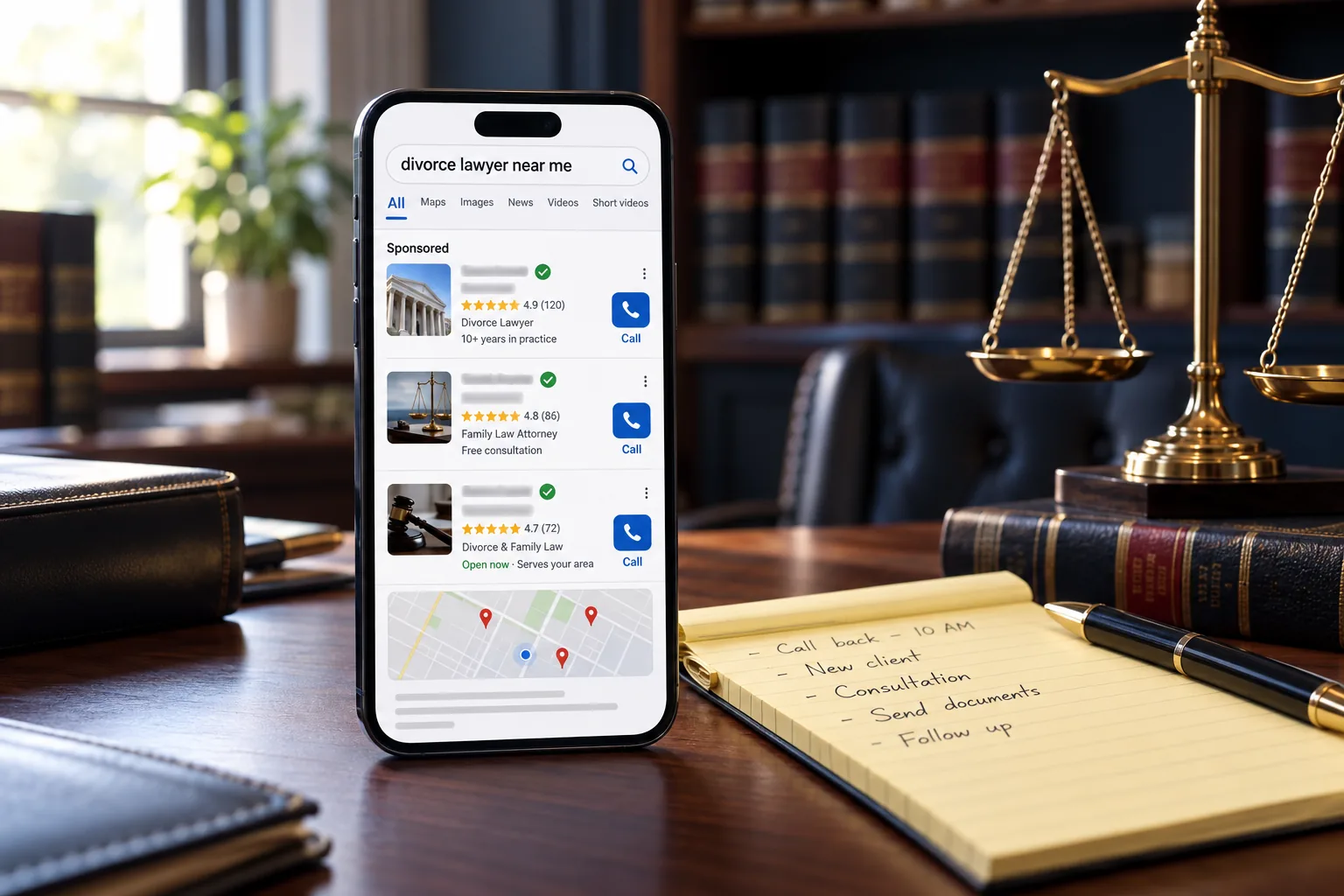
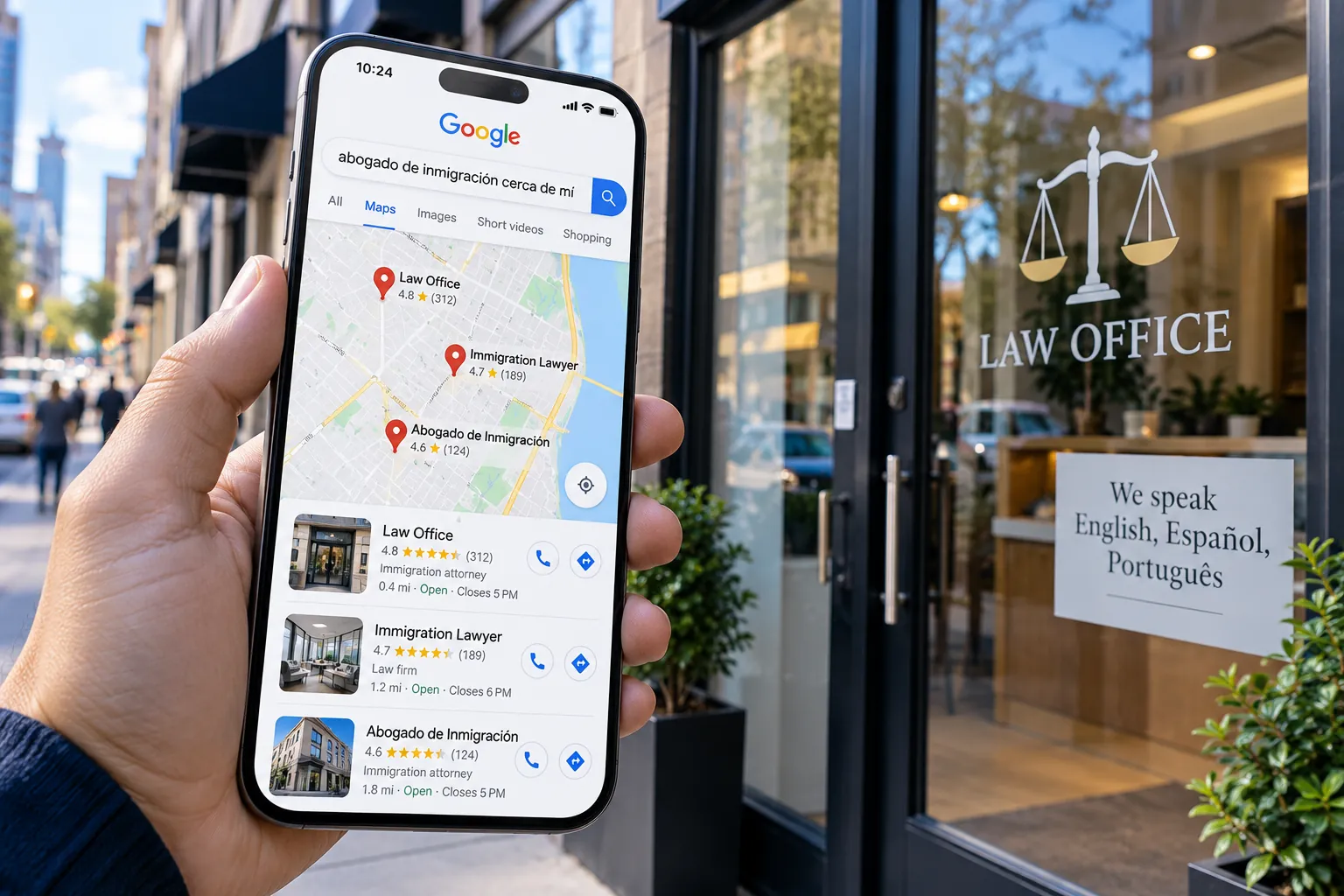
Short answer: be easy to find in the language your clients search in, and easy to reach once they find you. Most immigration clients hear a firm's name from someone they trust, then check it on Google: the reviews, the map listing, and whether anyone there speaks their language. A firm gets more of those clients by having a page for each kind of case it takes, in each language it serves, a Business Profile that says which languages the office speaks, reviews that mention them, and a phone line answered by someone who can hold the conversation.
I'm Ashikur Rahman. I founded Proximity Ranker to do search marketing for law firms and nothing else, and I studied law myself, to LL.M level. My SEO work goes back to 2017 and includes the years I spent as SEO Manager at Doctor Rank. A site I built and ranked for a new New York firm was seen 104,000 times in Google results in its first three months. This guide sticks to marketing. It doesn't cover immigration law, and none of it is legal advice.
Where do immigration clients look for a lawyer?
In two places, usually in order. Clio's 2019 Legal Trends survey found that 59% of legal clients asked for a referral and 57% searched online, which means many did both. Immigration is a strong example of that pattern. A cousin, a coworker or someone at church names a firm, and then the person looks that firm up on their phone before calling.
That second step is where firms lose clients without knowing it. If the search for the firm's name shows a thin profile, a handful of reviews and a website only in English, the person goes back to asking around. The referral got them to Google. What Google shows decides whether they call.
What do immigration clients type into Google?
They rarely use the terms lawyers use. They describe their situation, often in their own language, and often with "near me" at the end. These are the kinds of searches an immigration firm's pages should match:
- immigration lawyer near me
- abogado de inmigración cerca de mí
- green card lawyer
- family visa lawyer
- work visa lawyer for employers
- citizenship lawyer
- immigration lawyer who speaks Portuguese, Haitian Creole, Chinese or another language
Each type of case is a separate search with a separate intent. A firm with one "Immigration Services" page listing ten case types competes poorly against a firm with a page for each. And people searching in Spanish see results ranked on Spanish pages, so an English-only firm doesn't appear for those searches at all.
Why does language matter more in immigration than in other practices?
Because more of the clients are searching in another language. Census figures from 2018 to 2022 show 78.3% of US residents aged five and older speak only English at home, so about one in five speak something else. Spanish accounts for 61.1% of that group. In the Census figures for 2017 to 2021, about 62% of people who speak another language at home also speak English "very well," which leaves a large share who'd rather read about a serious decision in their first language.
For an immigration firm, that share of clients is far higher than the national average. If the firm really serves clients in Spanish, Russian or Mandarin, its website and profile should say so plainly, and should be available in those languages. If it doesn't, don't suggest it does. A visitor who calls and finds no one can help them in their language won't call back.
What does Google need from a multilingual immigration website?
Separate pages. Google's guidance on multilingual sites is to give each language version its own address, such as /es/ for Spanish, and to link the versions with hreflang tags so Google knows which page to show to whom. It specifically advises against switching the language automatically based on the visitor's browser, because Google's crawler may never see the other versions. A translate button that rewrites the page in the browser doesn't create pages Google can rank.
Translate the pages that bring in cases first: the homepage, the page for each main case type, the contact page and the lawyer bios. Have a fluent speaker review every translated page. My multilingual SEO guide covers the order and the traps in more detail.
How do immigration firms get into the Google map pack?
Google ranks map results on three things: relevance, distance and prominence. Distance you can't change. Relevance and prominence you can.
- Pick Immigration attorney as the primary category, and add others only for work the office really does.
- Use the description and services list to name the case types you take, in plain words.
- Say which languages the office speaks in the description, and use the same wording on the website.
- Post updates regularly, and add real photos of the office and the team.
- Keep one profile per real office. Extra profiles at addresses where nobody works break Google's rules and get removed.
Prominence comes largely from reviews and from the rest of the web: how often the firm is mentioned, linked and listed. That's slower to build, and it's where steady work pays off.
Want to see which immigration searches your firm shows up for, in each language?
Get the auditHow should the firm answer when an immigration client calls?
Quickly, and in their language. In Clio's 2019 Legal Trends survey, 82% of people looking for a lawyer named a timely response as the most important factor, and 64% said they'd contacted a firm that never replied. When Clio tested firms itself, only 40% answered an email, and more than half didn't return a voicemail within 72 hours. An immigration client often calls more than one firm on the same afternoon. The first one to answer properly usually books the consultation.
Make sure whoever answers can handle the main languages, or can at least book a call back with someone who can, on the same day. Put the languages next to the phone number on the website. And check where after-hours calls and website forms actually go, because a form that lands in an unread inbox loses cases just as surely as a phone that rings out.
Do reviews in other languages help an immigration firm?
Yes, for two reasons. BrightLocal's 2025 survey found that 83% of consumers read reviews on Google, more than any other site. A review written in Spanish tells a Spanish-speaking visitor that people like them chose this firm. The words in reviews also feed Google's understanding of what the firm does and for whom.
Ask every satisfied client, in the language you worked with them in, and make it easy with a direct link. Never offer anything in return for a review, and never write one for a client. Reply to every review, briefly and without confirming any details of a client's matter. Many immigration clients won't want to post publicly, and that's fine. You only need a steady flow from the ones who are happy to.
Should immigration lawyers run Google Ads?
Ads can fill the gap while the organic pages build, especially for a newer firm. According to WordStream by LocaliQ, legal advertisers paid $8.58 a click on average in 2025, and $131.63 for each lead, more than any other industry measured. Ads in a second language are worth testing too, with each ad sending people to the page in that language. The SEO vs Google Ads guide explains when each one makes sense.
What does marketing an immigration firm cost with me?
My SEO plan for an immigration firm includes the Business Profile, a page for each case type in each language the firm serves, reviews and AI search tracking. The price is $799 a month for the first five firms, held at that level as long as they remain clients, and $1,199 for firms that join later. There's no minimum term. Google Ads management, negative review removal and the opening audit are part of the plan, and firms that stay six months can have a new site built, up to 50 pages, at no charge. Firms that want the audit alone pay $350 for one office or $550 for two. The immigration lawyers page shows how the work fits an immigration practice, and every term is on the pricing page.
What else do law firm owners ask?
01What is the best way to get more immigration clients?
Combine the referral and the search. Make sure the firm's Business Profile, reviews and website match what a referred client expects when they look you up, in their language, and answer every call and form the same day.
02Should my immigration firm's website be in Spanish?
If the firm truly serves clients in Spanish, yes, with real Spanish pages on their own addresses, reviewed by a fluent speaker. If no one at the firm speaks Spanish, don't publish Spanish pages that suggest otherwise.
03Can I use Google Translate for my immigration law firm's website?
Not on its own. A browser translation widget doesn't create pages Google can index, and machine translation without review makes mistakes clients notice. Use translation as a first draft at most, and have a fluent person check every page.
04How many Google reviews does an immigration law firm need?
There's no fixed number. Look at the firms in the top three map results near your office and aim to match their count and how recent their reviews are. A steady flow of new reviews matters more than a single burst.
05How long does it take for an immigration firm to rank on Google?
Map results can move within a few months of steady profile and review work. New pages for competitive case types usually take three to six months to settle, and longer in big cities with many established firms.