Short answer: you get your law firm into ChatGPT search results by making sure ChatGPT can reach your site, find it through Bing and confirm what it reads there. That means allowing OpenAI's search crawler, having pages that work without JavaScript, publishing a page for each case type that answers clients' questions in its first lines, keeping the firm's details identical across the web and collecting reviews that describe the help. You can't pay for a place in ChatGPT's answers. You can make your firm the easiest one for it to recommend with confidence.
I'm Ashikur Rahman, founder of Proximity Ranker, an SEO and AI search specialist with legal training (an LL.B and an LL.M). One personal injury firm I work with was cited 208,400 times by Copilot and Bing's AI answers over three months, across an average of 131 of its pages; the dashboard is on my case studies page. This guide is specifically about ChatGPT. For how AEO and GEO relate to SEO, see the difference between SEO, AEO and GEO.
Do people really ask ChatGPT to recommend a lawyer?
Yes, and more each year. By OpenAI's own count in February 2026, 900 million people a week were using ChatGPT. BrightLocal's 2026 consumer survey found AI tools such as ChatGPT had become the third most used source for local business recommendations. Clio's 2025 Legal Trends Report found that 28% of people who asked an AI tool about a legal problem were told to contact a lawyer, which is exactly the point where the next question is which one.
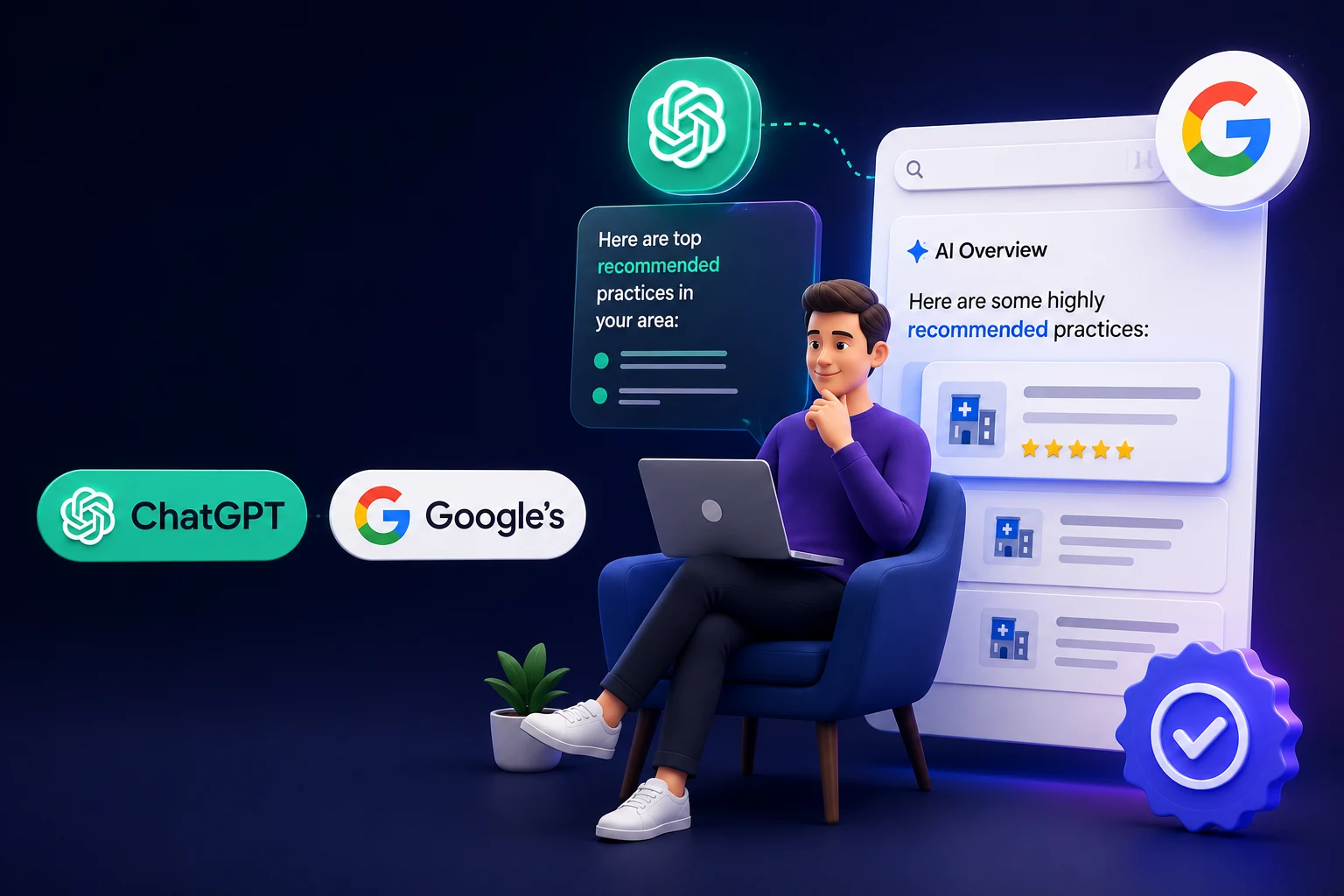
What makes this different from Google is the shape of the answer. ChatGPT doesn't show ten links; it names two or three firms in a paragraph. Being one of them is worth more than a high ranking, and not being one means the person may never see your name.
How does ChatGPT search find law firms?
OpenAI launched ChatGPT search on October 31, 2024. When a question needs current or local information, ChatGPT searches the web, reads a handful of pages and writes an answer with links to its sources. OpenAI's help documentation names Bing as a third-party search provider behind it, alongside OpenAI's own crawler.
- OAI-SearchBot: OpenAI's search crawler. It builds the index ChatGPT search answers from. Block it and your pages can't appear in those answers.
- GPTBot: OpenAI's training crawler. Blocking it opts your content out of model training without removing you from search answers.
- ChatGPT-User: fetches a page when a person in ChatGPT asks it to look at a specific link.
So there are two doors: OpenAI's own crawler and Bing's index. A firm whose site blocks OAI-SearchBot, or whose pages Bing hasn't indexed, is hard for ChatGPT to find however good its Google rankings are.
Where does ChatGPT get its information about law firms?
BrightLocal studied the sources ChatGPT cited for local business questions and found that business websites made up 58%, mentions on other sites 27% and directories 15%. In law firm terms, that's three places you can work on:
- Your own website: the biggest single source, which is why each case-type page and each lawyer page matters.
- Mentions elsewhere: local news quotes, bar and community association pages, podcasts, guest articles and genuine discussion threads.
- Directories: Avvo, Justia, FindLaw, Martindale, Super Lawyers, your bar or law society listing, Bing Places and Google's own listings.
ChatGPT's answers also lean on reviews. When it describes a firm, it often repeats the language clients used, so reviews that describe the help, rather than just five stars, feed directly into how it talks about you.
What makes a law firm easy for ChatGPT to recommend?
A site its crawler can actually read
Research by Vercel and MERJ found that OpenAI's crawlers download JavaScript but don't run it. If your page text only appears after scripts load, ChatGPT sees an empty page. Load your site with JavaScript switched off to check. Your hosting can get in the way too: since July 2025 Cloudflare has turned on AI crawler blocking by default for new domains, so open the firewall settings and robots.txt and confirm OAI-SearchBot is let through.
A page that answers the question being asked
ChatGPT quotes the page that best matches the question. A page about truck accident claims that opens with a plain answer beats a general practice areas page every time. Give each case type you handle its own page, and give each common client question, such as cost, timing and what happens first, a clear answer in the opening lines.
One firm identity, the same everywhere
The same firm name, lawyers, address, phone number and practice areas on your website, Google Business Profile, Bing Places, your bar or law society listing and every directory. ChatGPT compares what different sources say about a firm, and a mismatched address or old phone number is enough to make it name someone else.
Lawyers it can verify
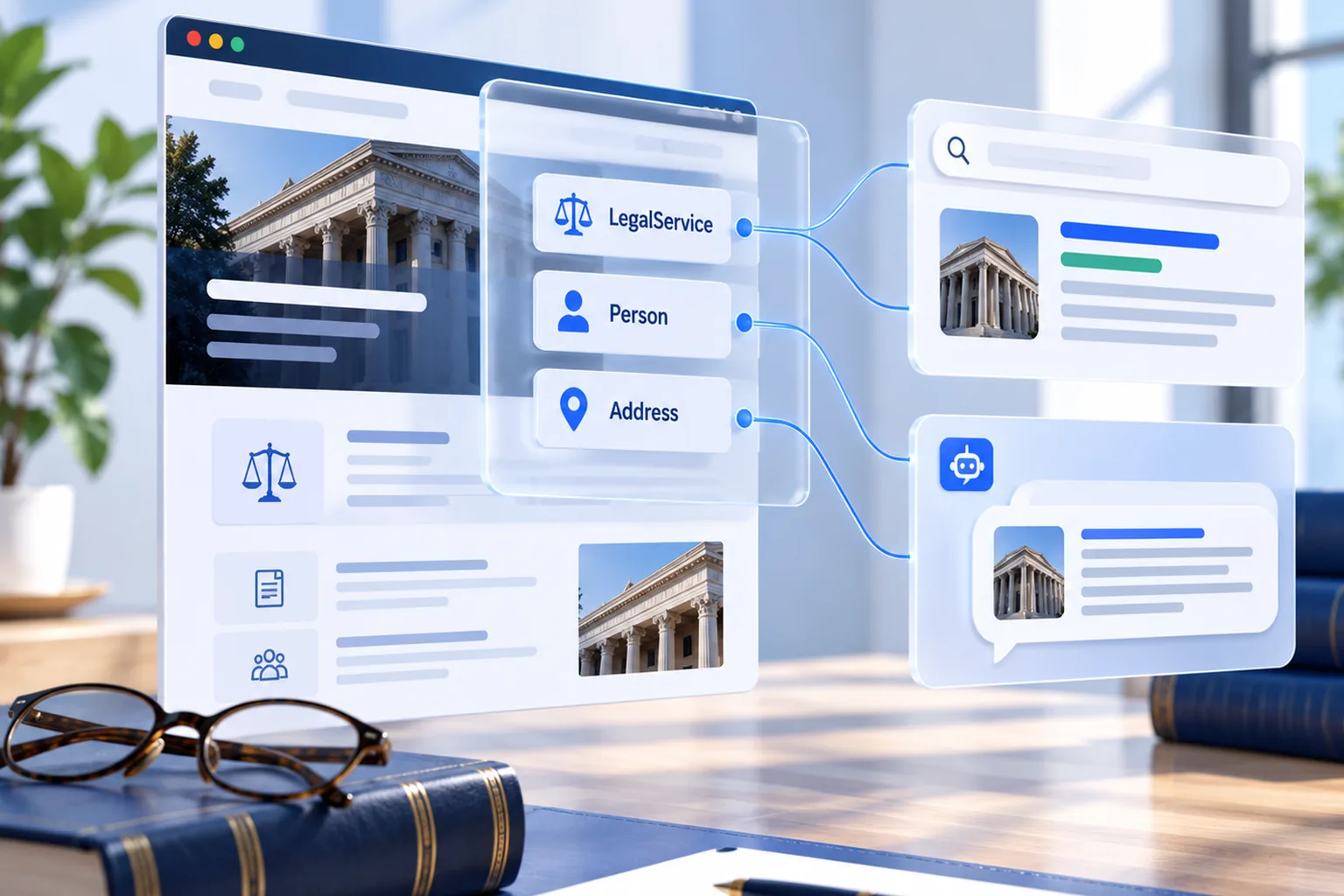
A page for each lawyer with their admissions, years in practice, case types and education, and structured data on the site that identifies the firm and each of its lawyers to machines. A recommendation for someone with a legal problem is one ChatGPT wants to source from a firm whose people it can confirm.
Proof with specifics
Dated case results where you're permitted to publish them, recognitions people have heard of, and clear explanations of how fees work. In the Princeton-led GEO study, pages gained the most visibility in AI answers when they cited sources and carried quotations and figures. Specific beats impressive.
Curious what ChatGPT says about your firm right now?
Get the auditHow can you check whether ChatGPT recommends your firm?
- Ask it, carefully. Use a logged-out or temporary chat so your own history and memory don't shape the answer, include your city, and run the same 20 to 30 client questions every month. Note which firms are named and which pages are cited.
- Read the sources. ChatGPT shows its sources beside the answer. If a directory or a competitor's page is cited instead of yours, that tells you what to fix.
- Check your analytics. OpenAI adds utm_source=chatgpt.com to links in ChatGPT answers, so those visits show up by source in Google Analytics. Some visits arrive without the tag, so treat the number as a floor.
- Check Bing Webmaster Tools. Its AI Performance report, in public preview since February 2026, counts citations in Copilot and Bing's AI answers, which share the Bing index ChatGPT draws on.
- Ask at intake. Add ChatGPT and other AI assistants to your how did you hear about us question.
How long does it take to show up in ChatGPT?
Crawl and indexing fixes can show within days or weeks once OAI-SearchBot and Bing have revisited the pages. Mentions, reviews and directory consistency build over months, and those are what move a firm from occasionally cited to regularly recommended. For the injury firm in my case studies, the 208,400 citations were counted over three months of steady work. Judge the trend across several monthly checks, not one answer.
What does ChatGPT optimization cost for a law firm?
ChatGPT work sits inside my SEO plan, $799 a month, month to month. Being found by ChatGPT and the other AI engines comes alongside local and on-page SEO, the Google Business Profile and a monthly report that includes the AI numbers. On the plan you don't pay extra for the audit, for removing reviews that break Google's rules or for running your Google Ads, and committing to six months brings a free website.
Bought on its own, the audit runs $350 for one office or $550 for two and records what ChatGPT says about your firm today and who it names instead. A website starts at $799, review removal $199 per removed review and Ads management $499 a month; see the pricing page. How I approach it is set out on AI search optimization for lawyers.
What else do law firm owners ask?
01Can a law firm pay to be recommended by ChatGPT?
Not in the organic answer. ChatGPT's recommendations come from what it finds on the web. Be wary of any service that sells a guaranteed ChatGPT recommendation; nobody outside OpenAI controls that, and anything presented to consumers as a recommendation may raise questions under your bar or law society's rules.
02Why does ChatGPT give different law firms each time I ask?
Answers are generated fresh and depend on the exact wording, the location, whether you're logged in and what ChatGPT remembers about you. That's why one test proves little. Use the same questions, logged out, every month, and count how often your firm appears.
03Does ChatGPT use Google Business Profile information?
Not directly; the profile is Google's. ChatGPT finds firms through its own crawler and Bing, so Bing Places for Business, your website and the legal directories matter more for ChatGPT than they do for Google. Keep the same details on all of them.
04Should we block GPTBot to protect our content?
You can block GPTBot to opt out of training and still allow OAI-SearchBot, which is the crawler that matters for appearing in ChatGPT search. Blocking OAI-SearchBot removes your pages from those answers.
05Does a law firm need an llms.txt file for ChatGPT?
It does no harm, but there's no evidence it helps. Google's John Mueller has said no AI system uses llms.txt. Crawler access, readable pages and consistent firm details matter far more.