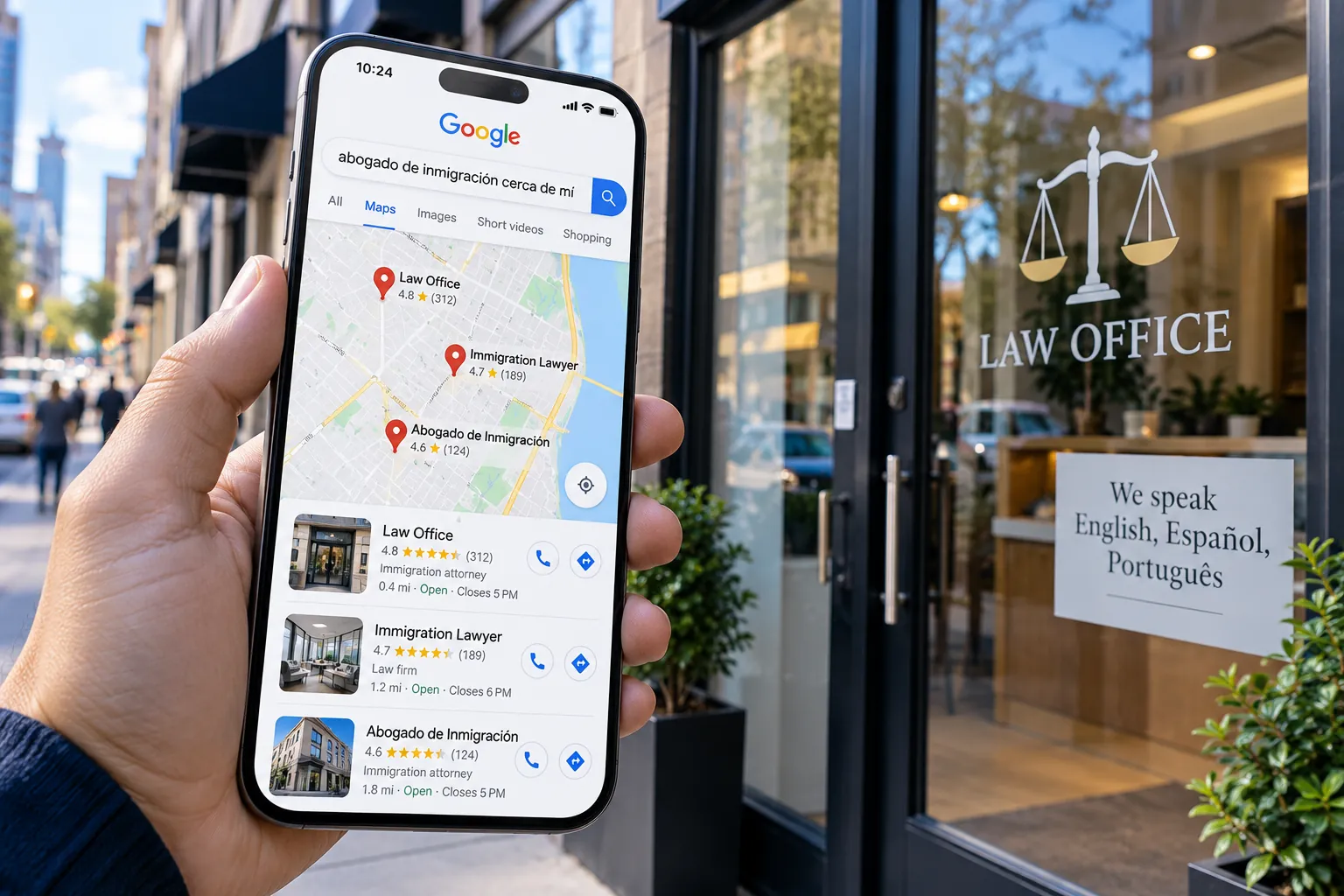

Short answer: free legal directory profiles are worth it for nearly every lawyer, and paid directory placements are worth it only when you can show they bring signed cases. Avvo, Justia, FindLaw and Super Lawyers rank in Google for lawyers' names and case types, and the AI tools clients now ask for recommendations cite them heavily. So claim and complete the free profiles. Treat the paid upgrades like any other ad: test them with tracking and keep the ones that pay.
I'm Ashikur Rahman, and I run Proximity Ranker, an SEO and AI search agency for law firms. My background is in law (LL.B, LL.M) and I've done SEO since 2017. In three months, Microsoft's AI assistants cited the website of one firm I work with 208,400 times (the dashboard is on my case studies page). Much of the work behind numbers like that happens off the firm's own site, on the profiles and directories that AI tools read to check who a firm is. I'm not giving legal advice here, only how directories affect how clients find and choose you.
On Reddit, lawyers are split on this. One thread titled Very disappointed in AVVO drew 46 replies, and others ask whether directory leads ever turned into paying clients. Both sides are partly right, because free profiles and paid plans do very different jobs.
What do legal directories actually do for a law firm?
They do four jobs, and only one of them is sending leads:
- They rank. Directory pages often show on page one for a lawyer's name and for case type searches, so a good profile is one more result you control.
- They confirm who you are. Google and AI tools compare your firm name, address and phone (your NAP), lawyers and practice areas across sites, and SEOs call each of these listings a citation. Matching details build confidence; conflicting ones weaken it.
- They get cited by AI. When someone asks ChatGPT, Perplexity, Gemini or Google's AI Overviews for a lawyer, the answer often draws on directory profiles and their reviews.
- They send leads. Some people browse a directory, read reviews and contact a lawyer straight from it, and paid plans push your profile higher for those people.
Most of the complaints are about the fourth job, and most of the value for a small firm is in the first three. Those three come with the free profile.
Do legal directories help with AI search?
Yes, and this is the biggest change since most lawyers last looked at directories. In 2026, InterCore, a legal marketing agency, ran 540 lawyer-hiring questions through AI tools and counted the sources the answers cited. A legal directory was the first source cited 77.8% of the time, directories made up at least 51.8% of all 18,900 citations, and Justia was the most cited single site at 9.7%. It's agency research rather than an independent study, but other 2026 reports point the same way, with Justia, Avvo, Super Lawyers and Martindale near the top.
What that means for you: when a potential client asks an AI tool to recommend a lawyer for their kind of case, the tool may be reading your Justia or Avvo profile before it reads your website. An empty or out-of-date profile is a missed chance; a complete one with the right practice areas and real reviews is a reference the AI can use. Clients research before they call, too. Martindale-Avvo's 2026 consumer research found that 92.4% of people research before they contact a lawyer.
Your own site still matters most, because it's where the AI tools find the detail they quote. I explain how both sides work together in how law firms get recommended by ChatGPT and on the AI search for lawyers page.
Is Avvo worth it for lawyers?
The free profile, yes. Avvo builds profiles for most licensed lawyers in the United States from public records, so you probably have one already, whether or not you've seen it. Claim it, add a photo, your practice areas, your experience and your contact details, and ask happy clients to leave reviews there as well as on Google. Avvo is part of Martindale-Avvo.
Avvo also gives each lawyer a rating from 1 to 10 using its own model. According to Avvo's FAQ, the model looks at experience, professional achievements, peer endorsements and any disciplinary record, and filling in more of your profile often raises the score. A low score on an unclaimed profile is usually a sign of a missing profile, not a weak lawyer.
The paid plans are where opinions split. Third-party reviews in 2026 put Avvo's paid options at roughly $100 to $300 a month, depending on your market and practice area, so ask for a written quote. Lawyers who are happy with them tend to be in practice areas where people browse and compare; lawyers who aren't tend to be in areas where people want someone today. Test before you commit, as described below.
Which legal directories should a law firm be listed on?
Start with the free profiles that rank and get cited most, then add the ones that fit your practice:
- Justia: free lawyer profile, the most cited legal site in the study above, and the profiles rank well. Fill in every practice area.
- Avvo: claim the profile it already built for you, then complete it and collect reviews.
- FindLaw: free basic listing. Paid profiles and lead programs are sold separately.
- Martindale-Hubbell and Lawyers.com: free basic profiles, worth claiming so your details match everywhere. Martindale also shows its AV Preeminent peer review rating for lawyers who hold one.
- Super Lawyers, Best Lawyers, Chambers and Legal 500: selection-based, so you can't simply sign up, but AI answers cite them often for firms that have them.
- Your bar or law society's directory and any practice-specific association listings.
Before anything else, write down the exact firm name, address, phone number, website address and lawyer names you'll use everywhere, and copy them onto every profile. If you've moved or changed your number, update the old profiles; outdated ones keep sending mixed signals for years.
How do you test a paid directory listing before renewing?
Give it 90 days and measure it like an ad. Here's the setup I use:
- Put a separate tracking phone number on the paid profile, so every call from it is counted.
- Add the directory as a source on your intake form, and ask every new caller how they found you.
- At the end of 90 days, count calls, consultations and signed cases from that directory.
- Divide what you paid by signed cases. Compare that with your cost per case from Google Ads, Local Services Ads or referrals.
- Keep it if it's cheaper per case or about equal and brings cases you want. Drop it if you can't trace a single signed case to it.
Example: $300 a month for three months is $900. If that brought 9 calls and 2 signed cases, that's $450 per case, which may beat your other channels. If it brought 9 calls and no cases, the leads were the wrong kind, and the profile can go back to free. Some directories also sell pay-per-lead programs; check your bar or law society's rules on paying for leads before you sign up for one.
Want to know how your firm looks across Google, the directories and AI answers?
Get the auditDo directory reviews matter as much as Google reviews?
Google reviews matter most, because they show on your Business Profile, in the map pack and in your Local Services Ads, and they weigh heavily in local ranking. Directory reviews come second, but they're not wasted. They show on profiles that rank for your name, and AI tools quote them when they describe your firm. A firm with 80 Google reviews and none anywhere else looks less established than one with reviews spread across a few sites.
Don't split your ask, though. Ask most clients for a Google review, and send a few each month to Avvo or Justia. My guide on how to get more Google reviews for a law firm covers the asking itself. If a review on any of these sites breaks the platform's rules, you can report it; I do that through Google's own process as part of negative review removal.
What does directory and citation work cost with Proximity Ranker?
Fixing and completing directory profiles is part of local SEO, and local SEO is in my SEO plan at $799 a month, month to month. The same plan includes Business Profile optimization, AI search optimization and a monthly report. The audit, negative review removal and Google Ads management come with it at no extra cost. Stay six months and a new website comes free.
If you just want to see where you stand first, the audit is $350 for one office or $550 for two. Separately, a website starts at $799, review removal is $199 for each review Google takes down and Google Ads management is $499 a month. All of it is on the pricing page.
What else do law firm owners ask?
01Do directory links help my website's Google ranking?
A little at most. Some directories pass link value to your site and many mark their links nofollow, so they pass little or none. The bigger benefits are the profile ranking for your name, consistent firm details and the AI citations.
02Can I delete my Avvo profile?
Avvo builds profiles from public records and generally doesn't remove them on request. The better move is to claim it and keep it accurate and complete.
03How many legal directories should my firm be on?
Quality beats count. Five to ten complete, consistent profiles on the main legal directories, your bar or law society listing and a few general ones like Bing Places, Apple Business Connect and Yelp are enough for most firms.
04Are paid directory leads shared with other lawyers?
It depends on the program. Some send a lead to several lawyers at once, and the first to call back usually wins. Ask in writing before you pay, because shared leads need a very fast intake.
05Is Justia better than Avvo?
They're not either-or, since both free profiles are worth having. Justia was cited more often in the 2026 AI study above, while Avvo's ratings and reviews are what many clients see first when they search a lawyer's name.