
Short answer: when a law firm's site gets visitors but no leads, it's usually one of seven things. The visitors are the wrong people. The page is slow on a phone. The phone number is hard to find or doesn't work as a link. The form doesn't send, or sends somewhere nobody looks. The page doesn't answer what the visitor needs to decide. The tracking isn't counting leads that do come in. Or the firm replies too late. You can check all seven in an afternoon, and the fix is usually small.
This is Ashikur Rahman, founder of Proximity Ranker. My agency builds and ranks websites for law firms only. I trained in law (LL.B and LL.M) and have worked in SEO since 2017, including a stint as SEO Manager at Doctor Rank. In the first quarter after launch, a new site I built for a New York firm appeared in Google results 104,000 times. Below is what I check when a firm's site brings visitors but no cases. It's about websites, not legal advice.
Are the right people visiting your site?
Start here, because no page can turn the wrong visitors into clients. Open Google Search Console, go to Performance, and read the Queries list. Many law firm sites pull most of their traffic from searches like "how much do lawyers make," "law firm jobs" or the definitions of legal terms. Those visitors are students, job seekers and researchers. They'll never call.
Then filter the Pages tab to your practice pages. If they get only a small share of the impressions, the site isn't failing to convert. It's failing to rank for client searches, and that's a different job. My post on why a law firm website isn't showing up on Google covers that side.
How fast does your site load on a phone?
Most people looking for a lawyer search on a phone, and slow pages lose them. Google published a figure, from its 2016 data, that that 53% of mobile visits are abandoned when a page takes longer than three seconds to load. The phones are faster now, but so are people's expectations.
Run your homepage and your top practice page through Google's PageSpeed Insights on its mobile setting. Then open them on your own phone, on mobile data, not office Wi-Fi. If you wait for a slider, a video or a chat widget before you can read anything, so does every visitor.
Can a visitor call you in one tap?
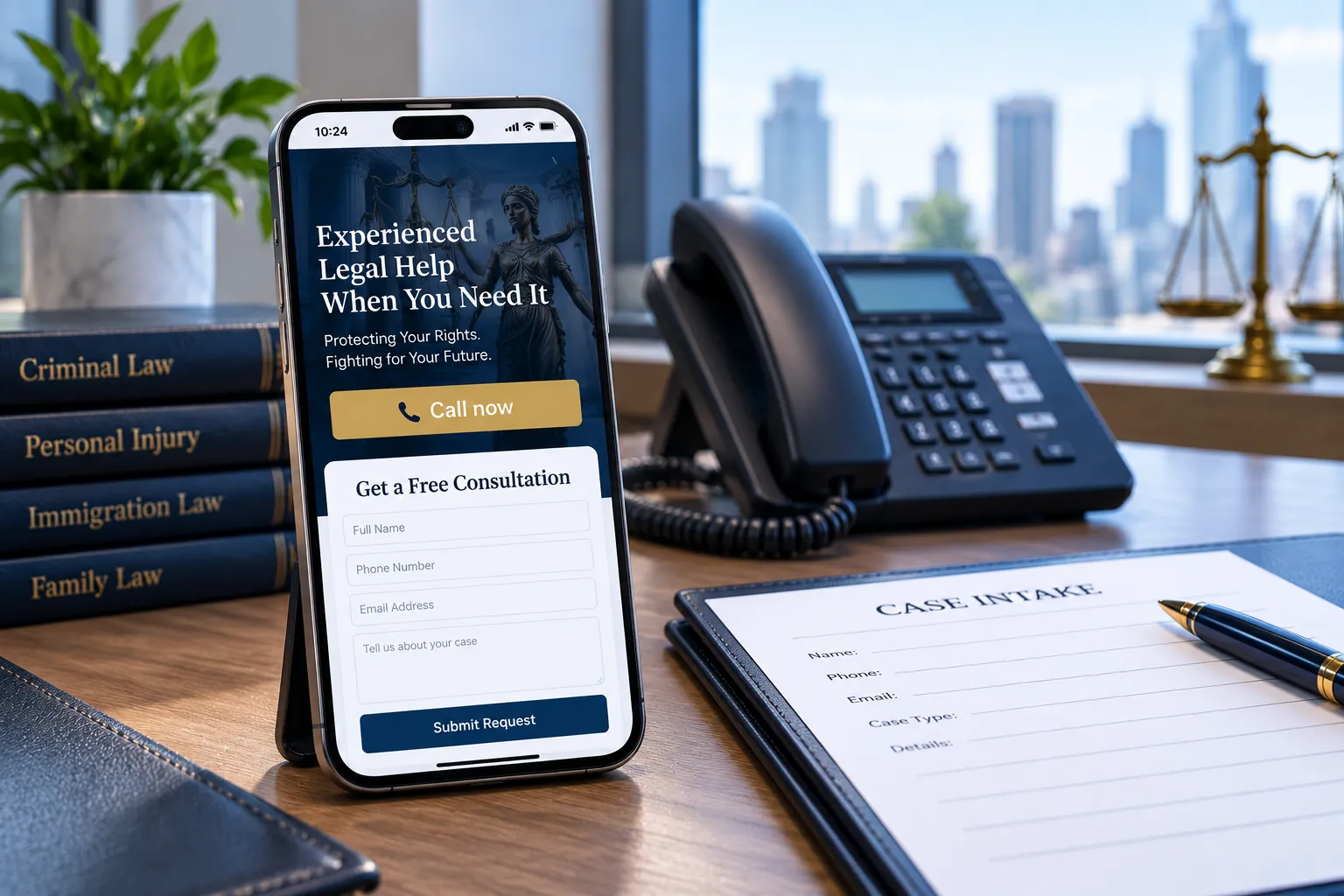
On a phone, the call is the lead. The number should sit at the top of every page, and tapping it should start a call. Check four things on your own phone:
- Is the number visible without scrolling on the homepage and every practice page?
- Does tapping it open the dialer, or does nothing happen because it's an image or plain text?
- Does it connect to a line that's answered, during the hours the site says?
- Do the buttons that say "Call now" or "Free consultation" lead to a call or a working form, not a dead link?
Does your contact form actually send?
Test it today. Fill it in as a client would, on a phone, and see if the message arrives, how long it takes and where it lands. Forms break quietly: a plugin update, a changed email password, a spam filter that starts catching every message, or an address that belongs to someone who left the firm. The website looks fine, so nobody checks, and the leads disappear.
Keep the form short. Name, phone, email and a box for a few words about what happened is enough to start a conversation. Ask for anything else on the first call, when you can explain why you need it. Every extra required field loses some of the people who'd have filled it in.
Does the page answer what the visitor needs to decide?
Someone who needs a lawyer wants to know a few things before they call: do you handle my kind of case, are you near me, who will I talk to, how do fees work, and do other people trust you. A practice page that opens with three paragraphs about the firm's commitment to excellence answers none of that.
- Name the kind of case and the area you serve in the first lines.
- Show the lawyer who'd handle it, with a real photo and a link to their bio.
- Explain how fees usually work for that kind of case, in general terms, without making promises.
- Show recent reviews, or link to the Google profile where they are.
- Say what happens when someone calls or fills in the form, and how fast you reply.
Want every page checked, from the first search to the call?
Get the auditDoes the site look like a firm that's still open?
Visitors judge a firm's site in seconds, and small signs of neglect make them doubt the firm behind it. None of these stop Google from ranking a page. All of them stop people from calling.
- A copyright year in the footer that's several years old.
- A news box whose newest post is from years ago.
- Stock photos of handshakes and gavels instead of the real lawyers and office.
- Broken images, missing icons or text that overlaps on a phone.
- A browser warning that the site isn't secure.
- Lawyers listed who no longer work at the firm, or a phone number that's changed.
Each takes minutes to fix. Open the site on a phone, look at it the way a stranger would, and write down everything that suggests nobody is looking after it.
What is a good conversion rate for a law firm website?
There's no single right number, because it depends on the practice, the city and where the visitors come from. For paid ads, WordStream by LocaliQ's 2025 benchmarks put the average legal conversion rate at 5.09%, meaning about one click in twenty became a call or form. Organic visitors convert differently, because many arrive at blog posts to read, not to hire.
The useful comparison is your own site against itself. Measure the share of visitors to each practice page who call or fill in the form, fix one thing, and measure again a month later.
Are you counting the leads you do get?
Sometimes the site is bringing in leads and nobody can see them. Calls go straight to the front desk, forms go to one inbox, and the website report shows visits but no results. Set up conversion tracking in Google Analytics for form sends and phone taps, use a tracking number on the website that forwards to your main line, and ask every new caller how they found the firm. Without those, any decision about the website is a guess.
What happens after someone contacts you?
A lead isn't a client until someone replies. Slow replies are common: only 40% of the firms Clio emailed for its 2019 Legal Trends Report wrote back, and 64% of the consumers it surveyed had reached out to a firm that never responded. If your site produces leads and your intake answers them a day later, part of your "website problem" is an intake problem. Reply to every form within the hour during business hours, and the same evening when you can.
What does it cost to fix a website that doesn't bring in leads?
Sometimes the fix is an hour's work: a form pointed at the right inbox, a phone number made tappable, a heavy plugin removed. When the whole site is the problem, I build a replacement designed around the call. Sizes are priced at $799 (10 pages or fewer), $1,599 (up to 25) and $2,599 (up to 50). The client pays half up front and half when the site goes live, the site sits on the client's own hosting, and the code belongs to the client from the start.
Firms that sign up for six months of SEO get the site, any of those sizes, without paying for the build. SEO runs $799 a month for the first five firms, a price that stays fixed for them, and $1,199 for everyone after. In that case I host the site on my account and connect it to the firm's domain, and after six months all the files transfer to the firm. Cancel before month six and the build is billed at its normal price. Website design explains the process, and the pricing page sets out the terms in full.
What else do law firm owners ask?
01Why does my law firm website get traffic but no calls?
Usually the traffic is from the wrong searches, the phone number is hard to reach on a phone, or the page doesn't answer what a client needs to decide. Check the queries in Search Console first, then test the site on your own phone.
02How many leads should a law firm website get?
It depends on the practice, the market and the traffic. Measure the share of practice-page visitors who call or send a form, and track it month by month. A steady rise matters more than matching any average.
03Should a law firm website have live chat?
Only if someone answers it quickly, or it books calls reliably after hours. An unanswered chat box is worse than none, and a heavy chat widget can slow the page on a phone.
04Does a law firm website need a contact form or just a phone number?
Both. Many people call, but some can't talk at work or prefer to write first. Keep the form short and make sure every message reaches someone who replies the same day.
05Can a website redesign increase leads for a law firm?
Yes, when the redesign fixes speed, the call path and the practice pages. A redesign that only changes how the site looks rarely changes leads, and one that drops pages or skips redirects can cost rankings.