Short answer: lawyer leads are worth buying only when you measure them by cost per signed case, and usually only for a limited time. Bought leads can fill a calendar while a firm builds its own sources, and some firms run them profitably for years. But a lead is only a name and a phone number. Many are sold to several firms, some come from people who never meant to hire a lawyer, and a few sellers take payment for leads that never arrive. The only number that tells you whether leads are worth it is what you paid per signed case, and most firms that buy leads never work it out.
I'm Ashikur Rahman, and I run Proximity Ranker, an SEO and AI search agency that only works with law firms. I trained in law (LL.B, LL.M), I've done SEO since 2017, and before starting the agency I was SEO Manager at Doctor Rank. The firms I work with mostly want the opposite of bought leads: calls that come to them directly. One Queens injury firm took 70 calls from its Google Business Profile in June 2026, 25% more than in June 2025 (it's on my case studies page). This post is about marketing and the numbers behind it. It isn't legal advice.
What are lawyer leads, and where do lead sellers get them?
A lawyer lead is the contact details of someone who said they need legal help, sold to a firm for a fee. The seller rarely knows the person. It finds them through its own advertising, collects a phone number and a few answers, and passes them on. The questions on the form decide what kind of lead it is: a car accident in the last 30 days, a pending divorce, an arrest this week.
Most leads come from one of these places:
- Ad-driven websites with names like "accident help" or "injury claim check", built to collect forms rather than to represent anyone.
- Call centers that answer an ad, ask screening questions, then transfer the caller live to a firm that paid for the call.
- Directories and marketplaces that charge per contact, sometimes letting several firms bid on the same person.
- Referral sites that list real lawyers' names and route callers to whoever pays.
None of these is wrong in itself. The problem is that the firm can't see how the person was found, what they were told, or how many other firms received the same name. That's where most disappointment with leads starts.
Sellers sort leads by practice and by format. Personal injury leads are the biggest market, and car accident leads are often sold on their own as "MVA leads" (motor vehicle accident). Divorce, criminal defense and immigration leads are sold the same way, usually in smaller volumes, and the more urgent and valuable the case, the higher the price. The format matters as much as the practice: a web form, a live call transferred to your intake line, or an "aged" lead that has already been sold before and is resold cheaply weeks later.
What is the difference between shared and exclusive personal injury leads?
A shared lead is sold to more than one firm. The person fills in one form and then gets calls from three or four firms within minutes, which is why shared leads are cheaper and why speed decides who wins them. A firm that calls back the next morning is usually paying for a lead another firm already signed.
An exclusive lead is meant to go to one firm only. That's worth paying more for, but "exclusive" means whatever the contract says. Before you pay the higher price, get these answers in writing: exclusive for how long, exclusive in which area, and whether the same contact is sold again later as an "aged" lead. Ask, too, whether the person was told which firm would call them. Someone who expected a call from a firm they chose answers the phone. Someone who expected a generic "claims service" often doesn't.
How much do legal leads cost per lead and per signed case?
Price lists published by lead sellers and marketing companies in 2026 put a shared personal injury lead at roughly $50 to $150, an exclusive one at about $200 to $700, and a live call transfer at $500 to $1,200 or more. Those are the sellers' own figures, so treat them as a starting point. Prices climb in big cities and for serious injuries, and they drop for older leads that have already been sold once.
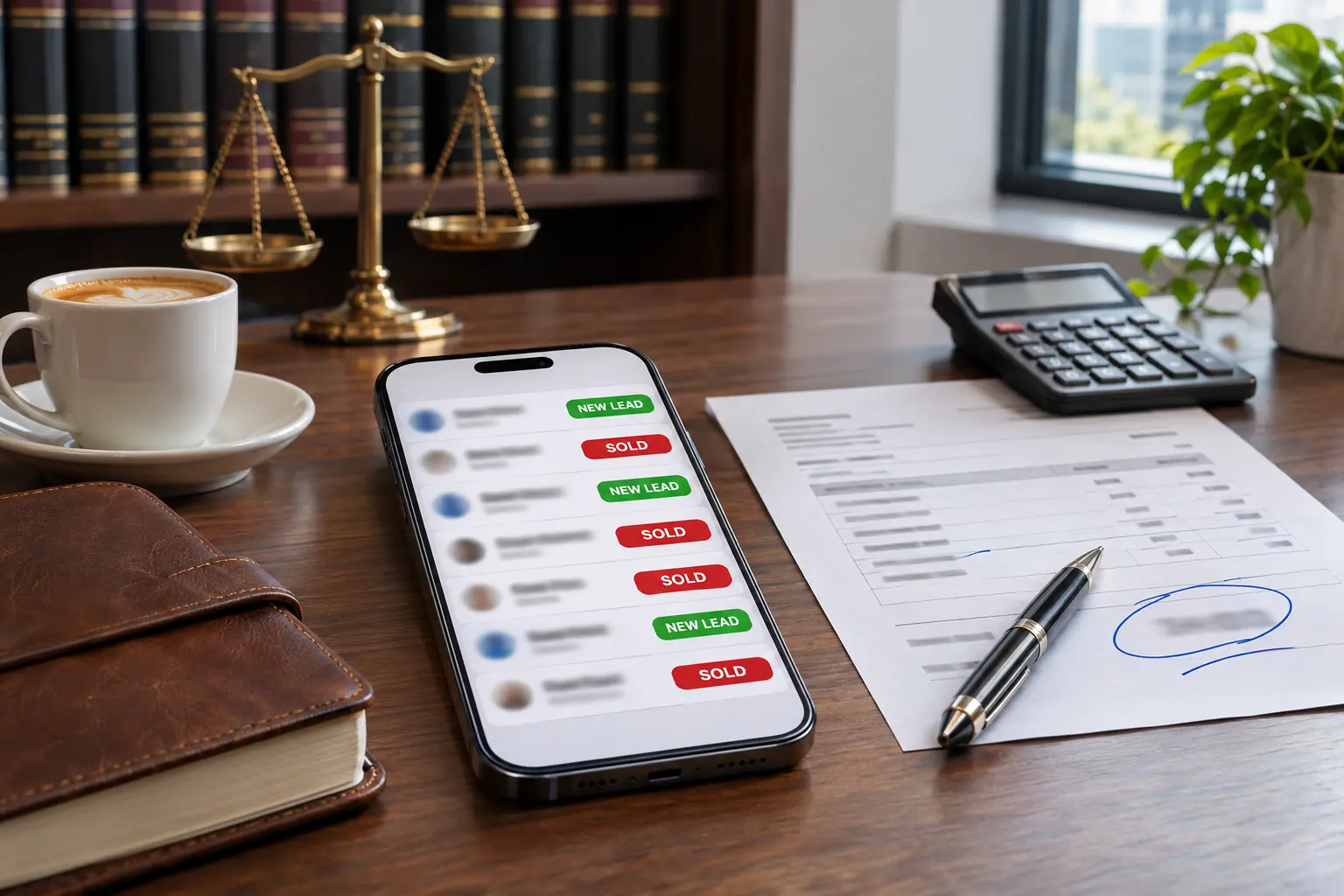
The price per lead hides the real cost. Here's a simple example. If a shared lead costs $100 and one in 20 signs, each signed case cost $2,000. If an exclusive lead costs $300 and one in five signs, each signed case cost $1,500, even though every single lead was three times the price. Run the same sum with your own numbers before you renew anything:
- Total spent with the seller in the last three months.
- Number of leads delivered, and how many had a working phone number.
- Number of consultations booked from them.
- Number of signed clients, and the fees those cases are expected to bring.
If you can't fill in the last line, you don't yet know whether leads are worth it for your firm. You only know what they cost.
Want to know how many clients your own Google profile and website could bring in instead?
Get the auditWhat went wrong for law firms that sued their lead sellers?
They paid up front for leads they had no way to check, and the leads never came. In March 2026, six law firms filed a lawsuit in Palm Beach County, Florida, against a legal marketing business and related companies, the Boca Post reported. Between them the firms say they paid more than $94,000 for qualified personal injury leads. According to the complaint, one firm paid for 80 leads and received one, and the other five received none. These are allegations, and no ruling had been reported when this was written.
It wasn't the first case like it. In December 2021, Law.com reported that Spencer Law Firm in Houston had sued a Pennsylvania marketing company for breach of contract. The firm said it paid $44,000 up front for 80 clients in a large product case and received a single lead.
A third story shows a different risk. Legal Newsline reported that Travis Patterson, an injury lawyer in Fort Worth, called the phone number a referral site listed under his own name and was told he wasn't available. People looking for him were being routed elsewhere. He got an injunction stopping the site from using his name.
The marketing lesson running through all three is the same. Each firm paid for something it couldn't check: a promised number of leads, delivered later, or a listing it didn't control. The money went out first and the proof was supposed to follow.
How can a law firm check a lead generation company before paying?
Check three things before you sign: where the leads come from, how and when you pay, and what happens to a bad lead. These checks take an afternoon and would have caught most of the problems above:
- Ask to see the actual ads and landing pages that produce the leads, and read them as a client would.
- Pay per delivered lead, or start with a small trial batch, instead of paying a large sum up front for a promised number.
- Get the return policy in writing: wrong numbers, duplicates, people outside your area and people who never asked for a lawyer should be credited.
- Ask how each person agreed to be contacted, and keep that record with the lead.
- Search your own name and your firm's name to see whether any site uses them to route callers somewhere else.
- Call 10 of the first leads yourself and note how many remember filling in a form.
Paying for referrals is also something many bars and law societies regulate, so check your own bar or law society's rules before you sign with any seller.
How do lawyers get leads they don't have to share with other firms?
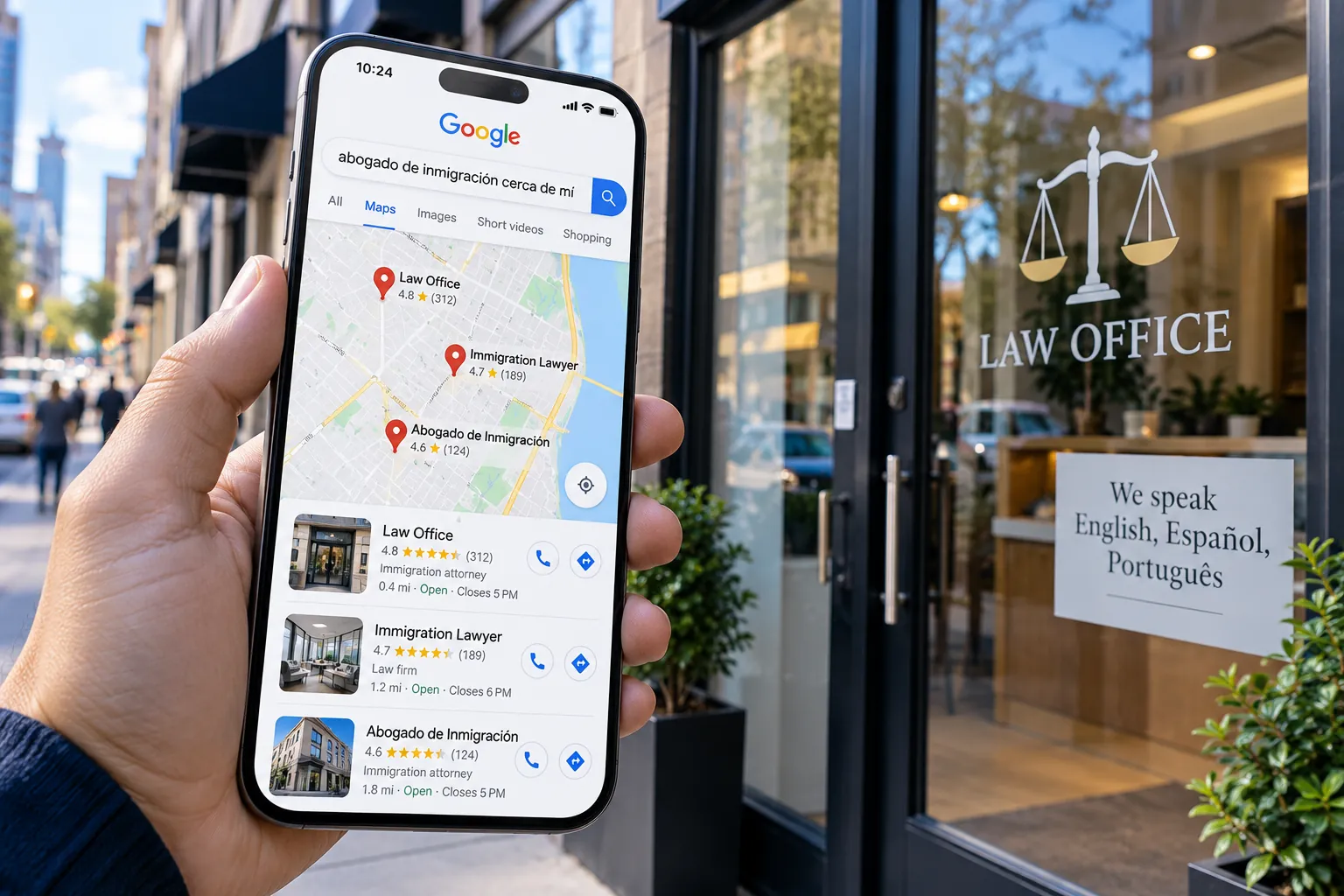
From sources you own: your Google Business Profile, your website, your reviews and AI search. The leads nobody else can buy are the ones that come to your firm by name. Someone searches "car accident lawyer near me", sees your firm in the map pack, reads your reviews and calls you. Nobody sold that call, and no other firm received it. The main sources are:
- Your Google Business Profile (GMB), which decides whether you appear in the map pack around your office.
- Pages on your website for each case type you take, written for the questions clients actually ask.
- A steady flow of genuine Google reviews from clients, which helps both your place in the map pack and the decision to call.
- AI search, since more people now ask ChatGPT or Google's AI answers which firm to call.
These take longer to build than a lead order. A profile and a set of pages usually need a few months before the calls grow, and results depend on your market. The trade is that the calls keep coming when you stop paying, and every one of them is yours alone. Many firms do both for a while: they buy a limited number of leads, track the cost per signed case, and cut the order as their own calls grow. The SEO for lawyers page explains how that work is done.
What does it cost to build your own leads with Proximity Ranker?
The SEO plan is $799 a month for the first five firms that join, and that rate stays the same for as long as they're clients. Firms that join after them pay $1,199 a month. It runs month to month with no contract, and it covers the Google Business Profile, case-type pages, reviews and AI search. The audit, Google Ads management and negative review removal come with it at no extra charge, and a firm that stays six months can have a new website built free. If you'd like the diagnosis first, the audit on its own is $350 for one office or $550 for two. The pricing page lists every term.
What else do law firm owners ask?
01Are shared leads ever worth buying?
They can be for a firm with a fast intake team that calls within minutes, day and night. Without that, another firm usually reaches the person first. Track shared and exclusive leads separately so you can see which one costs less per signed case.
02How fast should a firm call a bought lead?
Within minutes. A shared lead is calling or being called by other firms at the same time, and people tend to stay with the first firm that answers their questions properly. If no one at your firm can call that quickly, a bought lead loses most of its value.
03Can a firm get money back for bad leads?
Only if the contract says so. Many sellers credit wrong numbers, duplicates and people outside your area, but you usually have to report each one within a set time. Agree the rules before you pay and keep a log of every lead you dispute.
04Is buying leads cheaper than running Google Ads?
Not always. With ads you pay for clicks and control the page people land on, and every contact is yours. With leads you pay for contacts someone else collected. Compare both on cost per signed case over at least three months. The SEO vs Google Ads guide explains when ads make sense.
05How long does it take for SEO to replace bought leads?
It depends on your market, your current website and your Google profile. A firm with a weak profile in a busy city needs longer than a firm in a smaller town with some reviews already. An audit shows where you start and what to fix first.