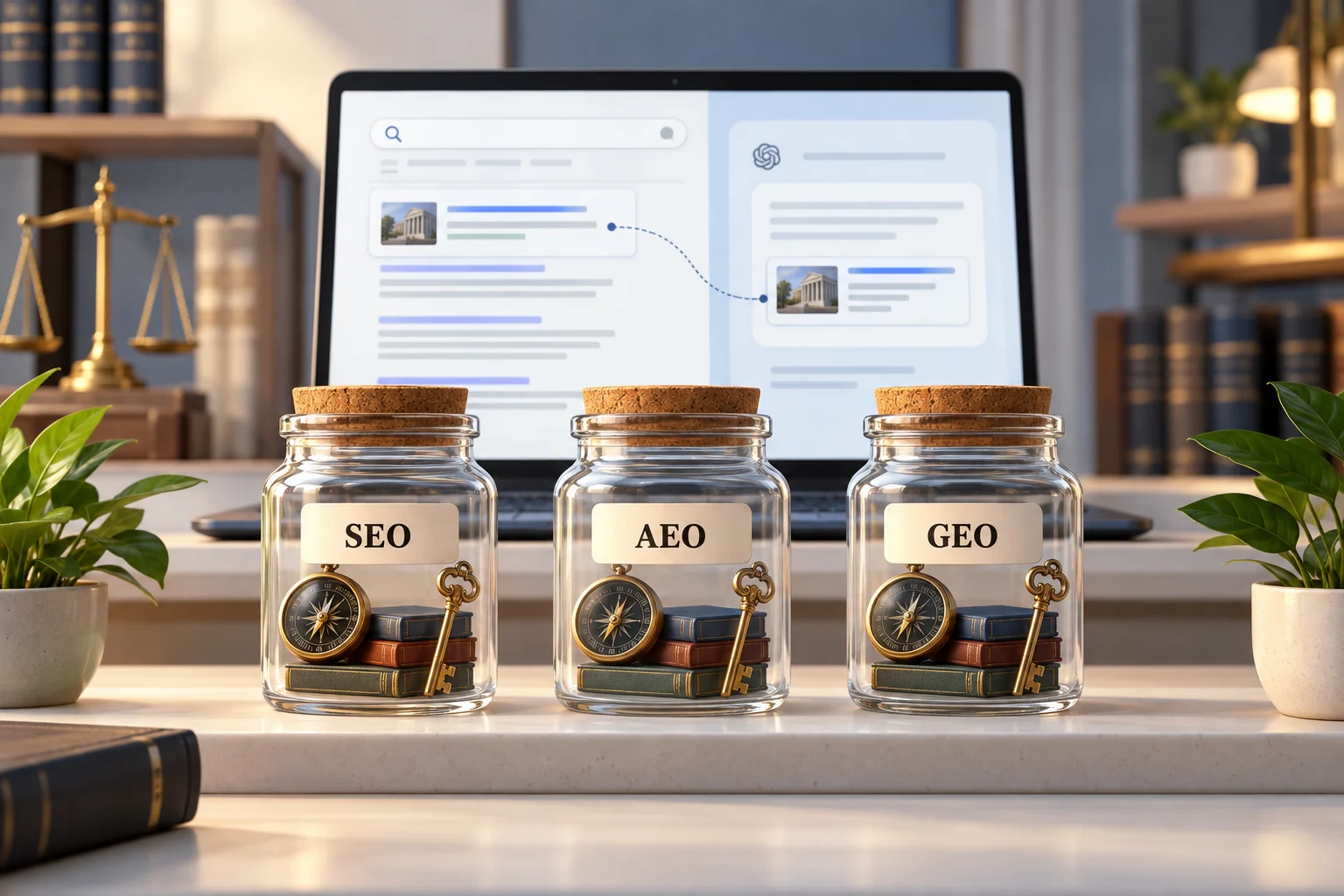

Short answer: no, not as a separate line item. AEO (answer engine optimization) and GEO (generative engine optimization) are the same foundation as law firm SEO: pages that answer real client questions, a site machines can read, and a reputation other websites confirm. Google itself says there are no extra technical requirements for its AI answers. What you should pay for is the work, named and measured, and if your SEO agency already does it, a second retainer with a new label buys you very little.
I'm Ashikur Rahman, founder of Proximity Ranker. I'm an SEO and AI search specialist with legal training, an LL.B and an LL.M, and I work only with law firms. In three months my work on one client site led to 208,400 citations in Microsoft's AI answers, across 131 cited pages, and I never sold that client a GEO package. It came out of the same SEO work. My job is search, not legal practice, so this is about how firms buy marketing and how clients find them, never legal advice.
Why are agencies suddenly selling AEO and GEO as separate packages?
Because a new name is easier to sell than a better version of an old service. When ChatGPT, Perplexity and Google's AI Overviews started answering questions, every firm owner began asking the same thing: are we showing up in there? That question created a market overnight, and agencies responded with new products.
You don't have to guess at the motive. Several marketing guides written for agency owners say it openly. One recommends selling GEO as an upgrade to existing SEO retainers because the trust is already built, and suggests a paid AI visibility audit as the entry point. Another lists "isn't this just SEO with a new label?" as a common client objection and coaches agencies on how to answer it. Those guides aren't secret. They're the playbook.
None of that means the agencies are dishonest, and some do careful work. It means you, as the buyer, should look at what the package contains before you look at what it's called.
What do AEO and GEO packages cost in 2026?
Published prices vary a lot, which is itself a warning sign that nobody agrees on what the product is. Here is what I found in October 2026:
- Nutshell's 2026 guide puts professional GEO services at roughly $1,500 to $50,000 a month, with the top end tied to large enterprise work.
- DemandLocal lists GEO retainers at $3,000 to $10,000 or more a month, a one-time GEO audit at $1,500 to $5,000, and a combined SEO and GEO offer that adds 20% to 30% on top of the SEO fee.
- An agency playbook suggests pricing an AI visibility audit at $2,500 to $7,500 as the first sale.
- One GEO agency focused on law firms lists a minimum project of $5,000 on Clutch.
Now compare that with what law firms already pay for SEO. Industry guides put typical law firm SEO at $1,500 to $5,000 a month, and my guide on what SEO costs a law firm goes through those numbers. Add a 20% to 30% GEO surcharge or a separate $3,000 retainer and a small firm can end up paying twice for one set of pages.
What is usually inside an AEO or GEO package?
When I read the scope sheets agencies publish, the same items come up again and again:
- Rewriting pages so each one answers a question in its first lines.
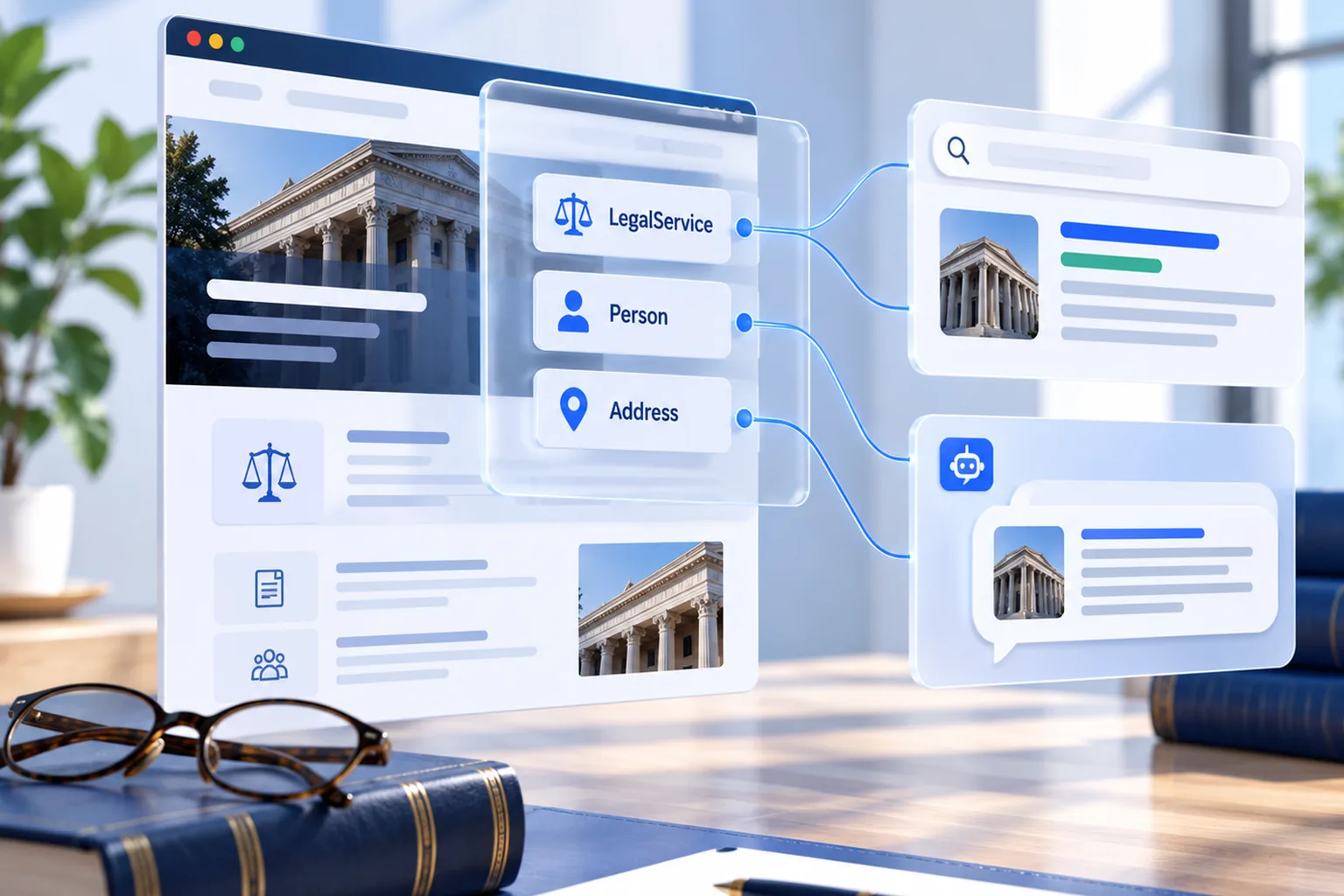
- Adding FAQ sections and structured data (the code that tells machines who you are and what you offer).
- Making sure AI crawlers aren't blocked and that the text shows without JavaScript.
- Building or cleaning up listings and mentions on directories and other websites.
- Tracking how often AI tools name the firm for a set of test prompts.
Look at that list again. Answer-first pages, structured data, crawlable text, directory listings and consistent firm details are what competent law firm SEO has included for years. The only genuinely new item is the last one, the AI tracking. So most of what a separate package sells is the SEO you should already be getting, described in new words.
What does Google say a page needs to show up in AI answers?
Google has answered this in writing. Its Search Central page on AI features says that to be shown as a supporting link in AI Overviews or AI Mode, a page has to be indexed and eligible to appear in Google Search with a snippet, and that there are no additional technical requirements. The same page points site owners back to ordinary SEO basics: let Google crawl the page, link to it internally, keep the important content in text and make structured data match what's visible.
Google's people have said it out loud too. Danny Sullivan, a director in Google Search, told a WordCamp audience in August 2025 that "good SEO is good GEO", and joked about the stream of acronyms: AEO, AI SEO, LLM SEO, "LMNOPEO". John Mueller, a Google search advocate, wrote in June 2025 that no AI system currently uses llms.txt files, and in June 2026 called the format "purely speculative".
For a law firm that matters even more, because legal pages sit in the category Google treats with the most caution. Trust is the deciding factor, and trust comes from clear answers, named lawyers, real reviews and consistent details, not from a new file or a new label.
Which part of AI search really is different from SEO?
I don't want to oversell the "it's all the same" point, because two things genuinely differ, and a good agency should be able to show you both.
The first is who gets cited. Ranking on Google doesn't automatically put you in ChatGPT's answer. Ahrefs compared ChatGPT's citations with Google's results and found only 6.82% to 10% of them came from Google's top 10, depending on the type of question. ChatGPT searches differently and reads different sources. In a separate Ahrefs study of 75,000 brands, mentions of a brand on other websites tracked visibility in Google's AI Overviews far more closely (a 0.664 correlation) than backlinks did (0.218). That's a correlation, not proof of cause, but the direction is clear: what other sites say about you counts.
The second is measurement. Rankings and clicks don't tell you whether an AI named your firm. You need different reports, which I come back to below.
Does law firm SEO already cover the off-site work AI engines rely on?
It should, and for law firms it usually does more of it than in other industries. The sources AI tools read when they recommend a lawyer are the same ones local SEO has always worked on: your Google Business Profile, your reviews, legal directories such as Avvo, Justia and Super Lawyers, your bar or law society listing, and mentions in local news. Getting your firm's name, address, phone, practice areas and lawyer names identical across all of them is basic local SEO. It's also exactly what lets an AI engine say your firm's name with confidence.
So the honest version of "SEO, AEO and GEO are the same" is this: they're one job with one foundation, and that foundation includes your reputation off your own website. If your current agency only works on your pages and never touches your profile, reviews or directories, you have a gap. But the fix is SEO done fully, not a second retainer.
Which AEO and GEO deliverables are red flags?
- An llms.txt file sold as a deliverable. Google has said it doesn't use one, and no major AI engine has said it relies on one. It's harmless, but it isn't worth paying for.
- A guaranteed spot in ChatGPT or Google's AI answers. No agency controls what these tools write, so a guarantee is a promise nobody can keep.
- A prompt-tracking dashboard as the only report. AI answers change from one run to the next, so a score from a handful of prompts tells you little on its own. It should sit next to Search Console, Business Profile calls and your intake data.
- A separate AEO or GEO retainer on top of an SEO retainer from the same agency, with overlapping tasks on both scope sheets.
- Special AI schema or hidden AI pages. Google wants structured data to match what's visible on the page, and content built only for machines is the kind its spam policies warn about.
Want to know what your firm already gets in Google and the AI answers before anyone sells you a package?
Get the auditWhich five questions show whether an AEO or GEO package is worth it?
Ask these before you sign anything, and ask for the answers in writing:
- Which tasks in this package are not already in our SEO scope? Ask for the two scope sheets side by side. If the lists overlap, you're paying twice.
- Which pages will change, and how? You should get a list of URLs and the change planned for each one, not "content optimization for AI".
- Which off-site profiles will you fix or build? Expect named directories, your Business Profile and a plan for reviews.
- How will you measure it? Look for Search Console, the AI Performance report in Bing Webmaster Tools, a fixed set of client questions checked every month, and a "how did you hear about us" line on intake.
- What happens if the numbers don't move? A month-to-month agreement and accounts in your name keep the risk on the agency, where it belongs.
If an agency answers all five clearly, you'll know exactly what you're buying, whatever they call it. If they can't, the label is doing the selling.
What does AI search optimization cost on the Proximity Ranker plan?
Nothing extra. AI search optimization, meaning answer-first pages, structured data, crawler access, directory and profile consistency and AI citation tracking, is part of my SEO plan. For the first five firms the plan is a founding rate of $799 a month, month to month, and that rate never goes up for as long as the firm stays on the plan. Firms that join after them pay the standard $1,199. The monthly report puts Search Console, Business Profile calls and AI citation numbers in one place.
The plan also includes the full audit, negative review removal and Google Ads management at no charge, and a firm that commits to six months gets a new website of any size. Bought on their own, the audit is $350 for one office or $550 for two, Google Ads management is $499 a month, review removal is $199 for each review Google takes down, and websites cost $799 for up to 10 pages, $1,599 for up to 25 and $2,599 for up to 50. Every price is on the pricing page, and my page on AI search optimization for lawyers shows how I run that side of the work.
For context, a firm I work with in Queens got 70 calls from its Business Profile in June 2026, 25% more than in June 2025. None of that came from a GEO package. It came from the profile, reviews and pages being right, which is the same work that feeds the AI answers.
What else do law firm owners ask?
01Is a separate AI visibility audit worth paying for?
Only if it tells you something your SEO audit doesn't. A useful one runs your clients' real questions through ChatGPT, Gemini, Perplexity and Google's AI, records which firms get named and which sources get cited, and turns that into a list of fixes. My audit includes that AI check alongside the map pack, Business Profile and reviews, so you aren't buying two audits.
02Should my SEO agency charge more now that AI search exists?
Not for the same work. If they're adding real tasks, such as new directory profiles or AI citation reporting, a modest increase can be fair, and they should be able to show the new tasks on paper. If the scope sheet looks the same with new words on it, the price shouldn't change.
03Can I keep my SEO agency and hire a separate GEO specialist?
You can, but two agencies editing the same pages and profiles tend to undo each other's work, and neither owns the result. If you go that way, agree in writing who changes which pages and which listings, and get one shared report.
04How long does AI search work take to show results for a law firm?
It follows the same clock as SEO, because the engines have to crawl and trust your pages first. Page fixes can show up once they're recrawled, while directory and review work builds over months. Be wary of anyone who promises AI recommendations within a few weeks.
05What should a monthly AI search report show?
The same questions checked every month with the firms and sources each engine named, citation counts from Bing Webmaster Tools and Google Search Console, Business Profile calls, and how many new clients said they found you through an AI tool. A single visibility score with no detail behind it isn't enough.