Short answer: personal injury lawyers get found on AI search by being the firm the engines can read, confirm and quote. That takes pages that answer injury questions directly, the same firm details across the web, reviews that describe the help, mentions on sites the engines trust and a website the AI crawlers can actually read. Ranking on Google helps, but on its own it isn't enough.
I'm Ashikur Rahman, founder of Proximity Ranker. I do SEO and AI search optimization for law firms, and I hold an LL.B and an LL.M. For one personal injury firm, my work led to 208,400 citations by Microsoft's AI assistants in three months, with 131 of its pages cited on average. For another, it brought 23,300 clicks from Google in six months. This guide explains how AI search works, what injured people ask it and what gets a firm named.
How does AI search actually work?
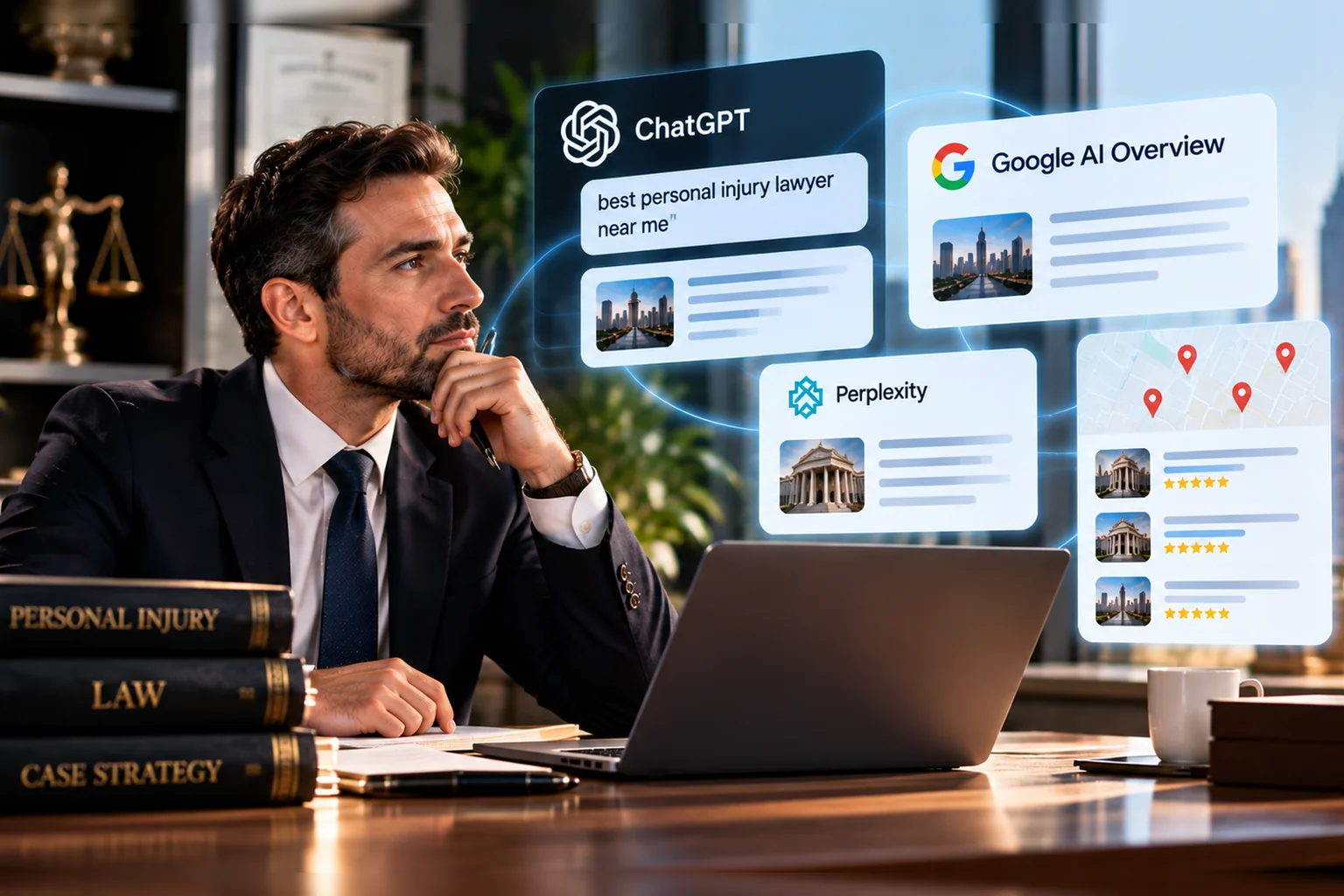
When someone asks ChatGPT, Perplexity or Google's AI Mode a question, the engine doesn't look the answer up in one place. It runs searches, reads a small set of pages and writes one answer from them, usually with links to its sources.
Google calls its version query fan-out: AI Mode breaks a question into subtopics and runs many searches at once on the person's behalf. A question like who's the best car accident lawyer near me can turn into searches about local firms, their reviews, their results and their fees. Each of those searches is a chance for your pages to be read, and each one your site can't answer is a chance for a competitor's.
This changes what winning looks like. On a normal results page, ten firms get a link. In an AI answer, three or four get named, and the person often calls one of them without visiting anyone's website.
What do injured people ask AI before they call a lawyer?
LawSHIFT calls this the pre-intake problem: injured people now talk to an AI before they talk to any firm, and by the time they call, they've often been told who to call. The questions look like these:
- who is the best car accident lawyer near me
- do I need a lawyer after a minor car accident
- how much is my injury claim worth
- how much do personal injury lawyers charge
- should I accept the insurance company's first offer
- what should I do after a truck accident
- best personal injury law firm, followed by a city
Clio's 2025 Legal Trends Report found that 28% of people who asked AI a legal question were told to contact a lawyer. That's the moment you want your firm to be the name in the answer. The first few questions are research, and the firms whose pages answer them clearly become the sources the engine trusts when the person asks the last one.
How many injury firms does AI actually recommend?
Very few, over and over. LawSHIFT, a legal marketing company, published its AI for PI Index in September 2026, built from more than 250,000 answers from ChatGPT, Claude, Perplexity and Google AI Overviews. By its count, 24,694 personal injury firms were named at least once, but more than half appeared only once, and only seven firms showed up in more than 1% of answers nationally.
The finding that matters most for a firm owner: across 81 established injury firms, LawSHIFT found almost no link between traditional search authority and AI visibility (a correlation of 0.076), with SEO strength explaining only about 2% to 11% of it. LawSHIFT sells marketing services, so read these as one company's research. They do match what I see in client accounts: a firm can rank well on Google and still be missing from the AI answers.
Where do ChatGPT, Google AI Overviews, Perplexity and Copilot get their answers?
- ChatGPT pulls live web results when it searches. BrightLocal's research on local searches found its citations came 58% from business websites, 27% from mentions on other sites and 15% from directories.
- Google AI Overviews and AI Mode draw on Google's own index, so your ranking pages and your Google Business Profile both feed them.
- Perplexity lists its sources beside every answer, which makes it the easiest place to see which sites the engines trust in your city.
- Microsoft Copilot uses Bing's index, and Bing Webmaster Tools reports how often Copilot and Bing's AI summaries cite your pages.
The pattern is the same across all four: an engine has to find you, read you and trust you before it names you.
What makes a personal injury firm easy for AI to cite?
A website the AI crawlers can read
Research by Vercel and MERJ found that OpenAI's GPTBot, OAI-SearchBot and ChatGPT-User and Anthropic's ClaudeBot download JavaScript but don't run it. If your pages only show their content after scripts run, ChatGPT and Claude see an empty page. Check your robots.txt and your firewall as well: Cloudflare began blocking known AI crawlers by default on new sites in July 2025, and many firms don't know it's on.
Pages that answer the question first
A page that opens with a direct answer to the question an injured person actually asks, then explains, is the page that gets quoted. Many injury sites bury the answer under a sales pitch. A page per accident type (car, truck, motorcycle, slip and fall, wrongful death) and a page per common question give the fan-out searches something to land on.
One firm identity, everywhere
The same firm name, lawyer names, address, phone and practice description on your site, your Google profile, the bar directory, Avvo, Justia, Super Lawyers and every other listing. When sources disagree, the engine hedges or leaves you out.
Proof an engine can read
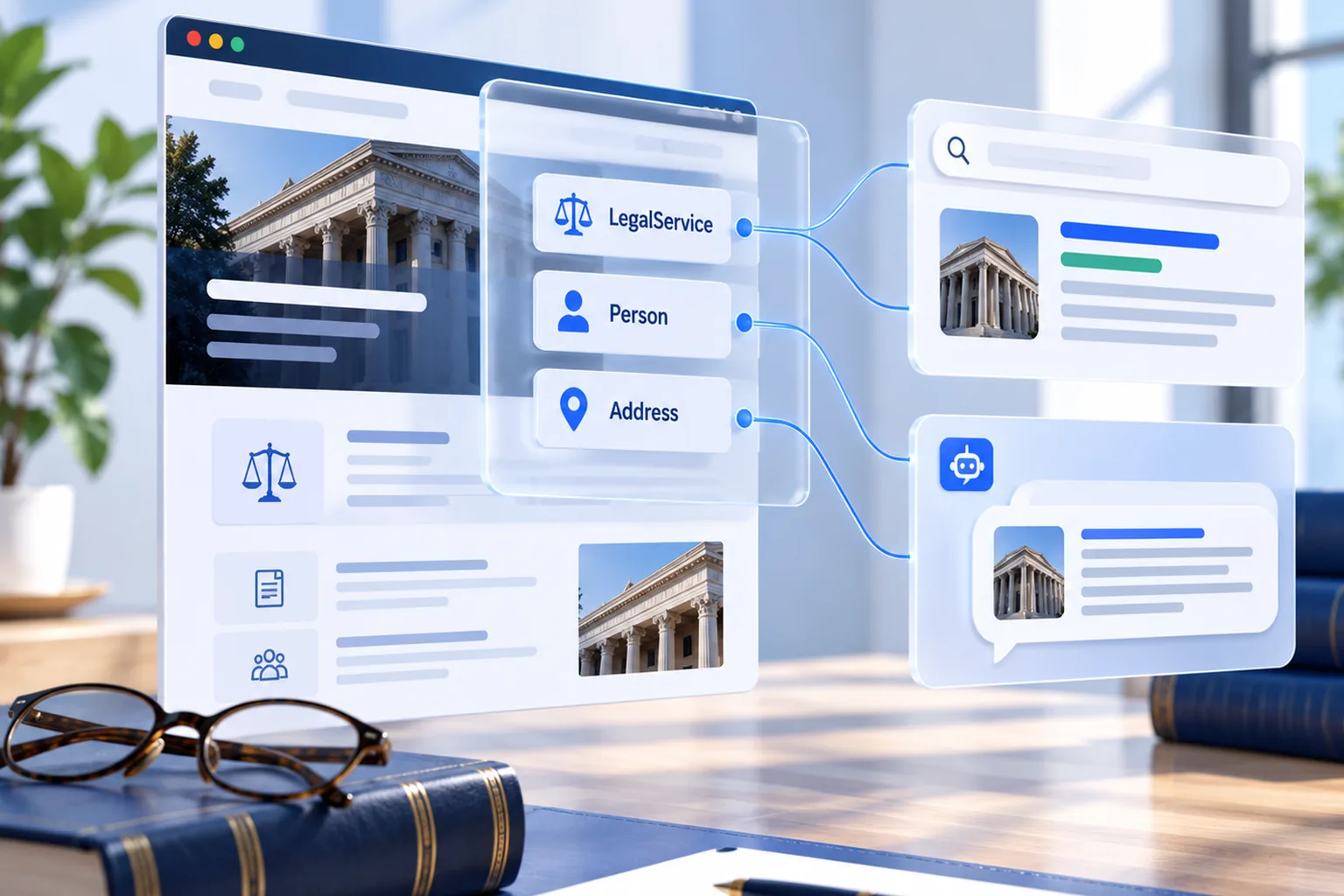
Case results with dates, amounts and case types, lawyer bios with years in practice and trial experience, and schema markup that tells machines who the lawyers are, where the firm is and what it handles.
Reviews that describe the help
A review that just says great lawyer helps far less than one saying the firm took on a truck accident claim after the insurer denied it and called every week with an update. Engines read review text. Ask clients to mention the kind of case and what you did for them.
Mentions on sites the engines trust
Local news quotes, bar association articles, community sponsorships, legal directories and podcast interviews. These are the mentions in BrightLocal's 27%, and they're the hardest thing for a competitor to copy.
Want to see what ChatGPT says about your firm right now?
Get the auditDo TV and billboard budgets help a firm show up in AI answers?
Less than you'd expect. In LawSHIFT's August launch data, Morgan & Morgan, the most-named injury firm in the country, appeared in about 6% of answers and came first in only two states. Brand recognition gets people searching for a firm by name, but an answer to best car accident lawyer near me is built from what the engine can read and check, not from airtime.
That's the opening for a mid-size firm. You can't outspend the billboard firms on TV, but you can have clearer pages, more detailed reviews and a cleaner presence across the web, and those are the things the engines pick up.
How can a personal injury firm check whether AI is naming it?
- Ask the engines. Run 20 to 30 of your clients' real questions through ChatGPT, Gemini, Perplexity and Google's AI Mode in a logged-out browser, and note which firms get named. Repeat every month, because the answers change.
- Open Bing Webmaster Tools. Its AI Performance report, in public preview since February 2026, shows how often Copilot and Bing's AI summaries cite your pages, which pages, and the queries behind them.
- Open Google Search Console. Its generative AI report shows the impressions your pages earned in AI Overviews and AI Mode. It shows no clicks and no queries, so read it as a trend line.
- Ask at intake. Add an AI assistant such as ChatGPT to your how did you hear about us question. It's the simplest measure of all.
The 208,400 citations I mentioned at the start come from that Bing report. The dashboard is on my case studies page, with the client's name withheld at their request.
What does AI search optimization cost for a personal injury firm?
AI search optimization comes with my SEO plan. The plan is $799 a month, month to month, and covers local and on-page SEO, Google Business Profile optimization, AI search optimization and a monthly report from the real dashboards, including the AI citation numbers. The audit, negative review removal and Google Ads management are included free, and if you stay six months, a new website is free too.
On their own, the audit is $350 for one office or $550 for two, and it shows what ChatGPT, Gemini and Google's AI say about your firm today. A website starts at $799, review removal is $199 for each review Google actually removes, and Google Ads management is $499 a month. Everything is on the pricing page. AI search optimization explains how I do the work, and SEO for personal injury lawyers covers the Google side.
What else do law firm owners ask?
01Does an llms.txt file help a law firm get cited by ChatGPT?
Not on current evidence. Google's John Mueller has said no AI system uses llms.txt, and Google's own documentation says the file neither helps nor hurts visibility in Google Search. It does no harm, and this site has one, but it isn't a lever. What matters is that the AI crawlers can read your pages in the first place and that the pages answer questions directly.
02How can I see visits from ChatGPT and Perplexity in Google Analytics?
In Google Analytics 4, create a custom channel group that matches the AI referrers, such as chatgpt.com, perplexity.ai, gemini.google.com, copilot.microsoft.com and claude.ai, and place it above Referral. Treat the number as a floor: some AI apps pass no referrer, so those visits land in Direct. That's why I also ask firms to add AI assistants to the how did you hear about us question at intake.
03Do Reddit and YouTube affect which injury firms AI recommends?
They can. Across studies of millions of AI answers, Wikipedia, YouTube and Reddit are among the most cited sources overall, and Ahrefs found Wikipedia and YouTube were the two most cited in Google's AI Mode. For an injury firm, short videos that answer clients' real questions and genuine mentions in local Reddit threads count for more than they used to. Never post fake reviews or pose as a client. The engines and the communities both catch it.
04Should a law firm block AI crawlers like GPTBot or PerplexityBot?
Not if you want to be named. OpenAI runs separate crawlers: GPTBot collects training data, while OAI-SearchBot builds the index ChatGPT search answers from. PerplexityBot builds Perplexity's index. Block the search crawlers and your pages drop out of those answers. Some firms block GPTBot for training and allow OAI-SearchBot. Check your host too: Cloudflare has blocked known AI crawlers by default on new domains since July 2025, so plenty of firms are blocked without knowing it.
05How long until AI tools start naming my firm?
Expect months, not weeks. The engines draw on what is already indexed and on mentions across the web. Crawlers can pick up a page change within days to weeks, but reviews, directory listings and mentions on other sites build slowly. For the injury firm in my case studies, the 208,400 Copilot citations were counted over three months. Check monthly with the same set of questions and judge the trend, not one answer.