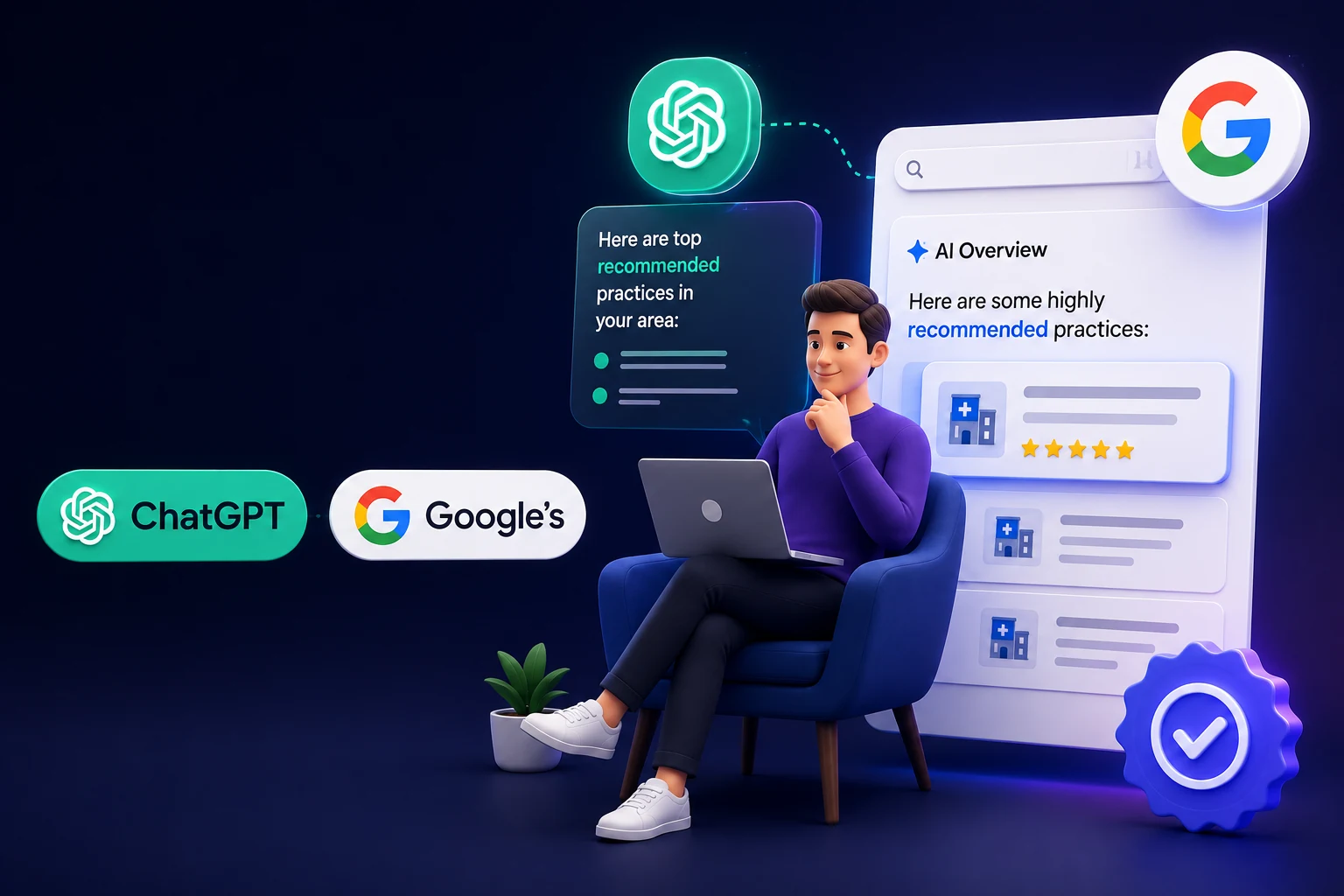
A woman whose husband has an expired visa does not always start on Google any more. Often she opens ChatGPT and types something like: do I need a lawyer to fix my husband's status, or can a notario help? The answer she gets names two or three options. If your firm is one of them, she calls. If it is not, she never knows you exist, and you never learn she was looking.
Clio's 2025 Legal Trends Report found that many people now ask an AI tool about a legal problem before they contact anyone, and that 28% of those who did were told to contact a lawyer. That handoff is the moment that matters for an immigration firm. The rest of this post is about how to be the lawyer the answer points to.
AEO, GEO and AI search optimization are the same job
You will hear three names for this. AEO, answer engine optimization, came out of the era of featured snippets and voice assistants. GEO, generative engine optimization, is the newer term for tools that write an answer instead of listing links, like ChatGPT, Google's AI Overviews, Perplexity and Copilot. AI search optimization is the plain-English version. In practice they all describe the same work, and you do not need to buy them as separate services.
Where ChatGPT's answers about lawyers come from
ChatGPT does not have a private list of good immigration lawyers. When a question needs current, local information it searches the web and builds its answer from what it finds. BrightLocal studied the sources ChatGPT used for local business questions and found that business websites made up 58% of them, mentions on other sites 27% and directories 15%.
Google's AI Overviews work from Google's own index, so they lean heavily on pages that already rank well. Either way, the engine is repeating and summarizing what the open web already says about you. You cannot pay for a place in the answer. You can make sure the web says something clear, accurate and specific.
What makes an immigration firm easy to cite
A page for the question being asked
Engines quote the page that matches the question. If someone asks how long a marriage green card takes, a page about marriage green cards with a plain answer in the first few lines beats a general immigration services page every time. Every case type you handle deserves its own page: family petitions, adjustment of status, naturalization, asylum, removal defense, H-1B, L-1, O-1, PERM, U visas, whatever you actually take.
One licensed identity, the same everywhere
Your firm name, address, phone number, attorneys and practice areas should match across your site, your Google Business Profile, your state bar listing, Avvo, Justia and anywhere else you appear. Engines cross-check sources, and contradictions make them hedge or leave you out. For immigration there is an extra reason: the engine is trying to tell licensed attorneys apart from notarios and consultants, so a clear, consistent licensed identity matters more here than in most practice areas.
Credentials an engine can read
Name your attorneys, list their bar admissions and say so if they are AILA members. Put that on the attorney pages and in your structured data, the code that labels your firm as a LegalService and each lawyer as a Person. An answer about a frightened family's case is one an engine wants to source from someone with verifiable credentials.
Current facts
Immigration rules change constantly, and engines avoid citing stale answers on a fast-moving rule. When USCIS raised its fees in April 2024, every page still quoting the old I-130 or N-400 fee quietly became a worse source. A visible last-reviewed date and a habit of updating pages when rules change both help.
Reviews that describe the help
AI summaries borrow language from reviews. A review that says the attorney explained the process in Spanish and answered every question before the interview gives an engine something specific to repeat. A wall of five-star ratings with no words gives it nothing. More on that in how to get more Google reviews for an immigration law firm.
Curious what ChatGPT says about your firm right now?
Get your free auditThe notario question is your opening
Do I need a lawyer or can a notario help me is one of the most common questions immigrants ask, and it is one AI engines handle carefully. The FTC warns that a notario or notario público in the United States is not a lawyer and cannot give legal advice, and only attorneys and accredited representatives of DOJ-recognized organizations are authorized to represent people in immigration matters.
A page on your site that answers this honestly, explains what a notario can and cannot do, and says plainly when a case needs a lawyer, is exactly the kind of source an engine wants when it is steering a vulnerable person toward safe help. Write it without scaremongering and without promising outcomes, and have an attorney approve it.
Languages change the answer
Many of your clients ask in their first language, and the engines answer in that language. When the question is in Spanish, the sources that get cited are mostly Spanish pages. A firm with only English pages is not in the running for that answer, however good its English site is. Building real pages in your clients' languages is covered in multilingual SEO for immigration law firms.
How to check whether it is working
Write down the ten questions your clients ask most, in the languages they ask them, and put them to ChatGPT, Google and Perplexity once a month. Note whether your firm is named, which page is cited and who is named instead. In Google Analytics, AI referrals often hide inside Direct traffic, so it is worth separating them out. The trend over a few months tells you far more than any single answer.
This is the work I do on the AI search side for immigration firms, and the monthly check is part of the report. If you want to see where you stand before anything else, the free audit starts with exactly those questions.

Founder of Proximity Ranker, with nine years in SEO and an LL.M in International Law. Not a licensed attorney, and nothing here is legal advice. Meet the founder.